
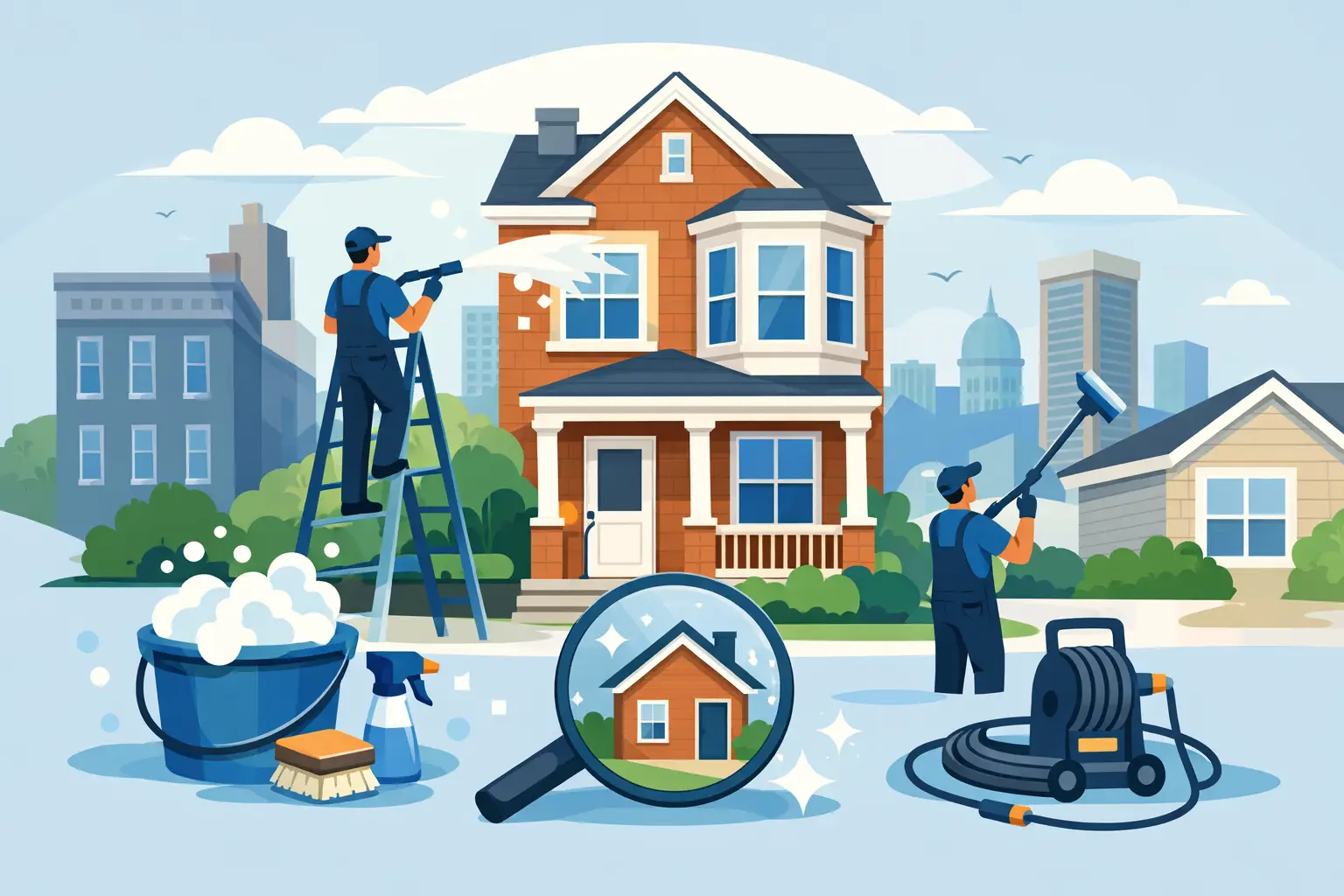
A house does not start looking worn out all at once. In Baltimore County, it usually happens layer by layer – green streaks on the siding, dark runoff under the gutters, black stains on the roof, slippery algae on the walkway, and pollen sticking to every surface by spring. Knowing the best exterior house cleaning methods helps you fix the right problem with the right approach, instead of using too much pressure and creating a bigger repair bill.
For most properties, the goal is not simply to make surfaces look cleaner for a few days. It is to remove organic growth, lift staining safely, and protect the material underneath. That is where many homeowners get tripped up. Exterior cleaning is not one-size-fits-all, and the method that works well on concrete can damage roof shingles, wood, screens, paint, or siding if used in the wrong place.
What makes the best exterior house cleaning methods effective
The best results come from matching the cleaning method to the surface, the type of buildup, and the age of the material. Dirt is one thing. Mold, mildew, algae, oxidation, grease, rust, and soot all behave differently and need different treatment.
A good exterior cleaning plan also considers runoff, nearby landscaping, and how much pressure a surface can handle. That is why professional service tends to produce longer-lasting results than a quick rinse with a rental machine. Proper detergents do most of the cleaning. Water pressure is there to rinse, not to act like a chisel.
Soft washing for siding, stucco, and painted exteriors
Soft washing is one of the best exterior house cleaning methods for delicate or finished surfaces. Instead of relying on high pressure, it uses low-pressure water and cleaning solutions to break down mold, algae, mildew, and surface grime.
This method is often the safest choice for vinyl siding, painted wood, stucco, composite materials, and trim. It cleans more thoroughly than blasting with high pressure because it treats the organic growth at the source. If you only rinse away the visible layer, staining and discoloration often come back faster.
Soft washing also reduces the risk of forcing water behind siding or stripping paint. That matters on older homes and on properties where caulking, seals, or finishes are already showing wear. It is a smarter method when your priority is clean results without surface damage.
Pressure washing for concrete, brick, and sturdy hardscapes
Pressure washing has its place, and when used correctly, it is one of the best exterior house cleaning methods for tough exterior surfaces. Driveways, sidewalks, patios, some retaining walls, and certain masonry areas can handle higher pressure than siding or roofing.
Concrete responds especially well because embedded dirt, algae, tire marks, and weather staining often need stronger mechanical cleaning. Brick can also clean up nicely, but the pressure has to be adjusted carefully based on the condition of the mortar. Older mortar joints can be damaged if the operator treats them like brand-new concrete.
This is where experience matters. More pressure does not always mean a better result. Etching concrete, furring wood, and loosening joint material are all common mistakes when equipment is used too aggressively. The right nozzle, surface cleaner, and detergent mix make a major difference.
Roof cleaning requires low pressure, not brute force
Roof stains are one of the most misunderstood exterior cleaning issues. Those dark streaks are often caused by algae, not simple dirt. Trying to pressure wash asphalt shingles can shorten the life of the roof by knocking off granules and stressing the surface.
That is why low-pressure roof cleaning is considered one of the best exterior house cleaning methods for shingles. A professional roof wash uses specialized solutions to treat the algae and staining without the damage associated with high pressure. The roof gets cleaner, and the treatment addresses the growth instead of just disturbing it.
It also improves curb appeal fast. A roof is one of the largest visible surfaces on the house, so even modest staining can make the whole property look older than it is. If you are preparing to sell, refinance, or simply want the house to look well cared for again, roof cleaning can have an outsized visual impact.
Gutter cleaning and gutter brightening are not the same thing
Homeowners often lump these together, but they solve two different problems. Gutter cleaning removes leaves, debris, and clogs from inside the gutter system so water can flow properly. Gutter brightening removes the dark tiger-striping and oxidation stains on the outside faces.
Both matter. Functional gutters protect your roofline, fascia, siding, and foundation from water overflow. Clean-looking gutters improve the appearance of the entire front elevation. If the outside of the gutters still looks stained after debris is removed, that does not mean the service failed. It usually means the exterior needs a separate brightening treatment.
As part of an overall property refresh, this combination is one of the best exterior house cleaning methods because it addresses both drainage and curb appeal at the same time.
Deck and fence cleaning needs a careful touch
Wood and composite surfaces need more nuance than many people expect. A deck may look solid enough for high pressure, but too much force can scar the boards, raise fibers, and leave the surface uneven. Fences have similar risks, especially if they are older or sun-dried.
The best method depends on the material and what comes next. If the deck will be stained or sealed, the cleaning has to prepare the surface without damaging it. If it is composite, the approach may be gentler and focused on removing algae, dirt, and organic buildup without leaving streaks or oxidation marks.
This is one of those areas where a professional assessment can save money. Replacing damaged boards or correcting improper prep work costs far more than cleaning it correctly the first time.
House washing is often better as a full-property plan
Many homeowners call for one problem area, then realize the rest of the exterior is dragging down the result. Clean siding next to a stained roof or bright concrete next to overflowing gutters can make the unfinished sections stand out even more.
A full-property approach usually creates the most noticeable transformation. House washing, roof cleaning, gutter cleaning, concrete cleaning, and deck cleaning work together because they improve the overall look and function of the property. It is also more convenient to handle multiple exterior maintenance needs with one trusted company than to coordinate separate vendors.
For busy homeowners and property managers, that matters. Fast scheduling, clear pricing, and one point of contact make exterior maintenance easier to keep up with year after year.
DIY vs professional cleaning
There are situations where a homeowner can handle light rinsing or routine upkeep. If you are washing patio furniture or hosing off light dust from a small surface, basic tools may be enough. But the line gets crossed quickly once ladders, rooflines, detergents, electrical fixtures, oxidation, or heavy algae growth enter the picture.
Professional cleaning is usually the better move when the surface is delicate, the staining is severe, or the wrong method could cause damage. It is also the safer choice for multi-story homes, steep rooflines, and properties with mixed materials. The value is not just labor. It is knowing how to clean each surface correctly, how to protect surrounding areas, and how to deliver a result that lasts.
That is why homeowners across Baltimore County often choose a company like Superior Cleaning Solutions for exterior maintenance. When you are dealing with visible staining and long-term property care, experience shows.
When to schedule exterior cleaning in Maryland
Spring and fall are popular for a reason. Spring cleaning clears away winter grime, pollen buildup, and moisture-related staining. Fall is ideal for cleaning surfaces before colder weather sets in and for making sure gutters are flowing properly.
That said, exterior cleaning is not limited to two seasons. Summer is often a strong time for siding, decks, patios, and concrete. If algae growth is active or the property is getting ready for guests, photos, leasing, or a sale, it makes sense to schedule service when the need is visible.
The best timing depends on the condition of the property, the surrounding tree cover, recent weather, and whether you are cleaning for maintenance or for a major visual reset.
Choosing the right method starts with the right inspection
If you take one thing away from this, let it be this: the best exterior house cleaning methods are the ones matched to your surfaces, not the ones that sound the strongest. Soft washing, pressure washing, roof treatment, gutter cleaning, brightening, and deck cleaning each have a place. The right choice depends on what you are cleaning, what is growing on it, and how to get it clean without causing harm.
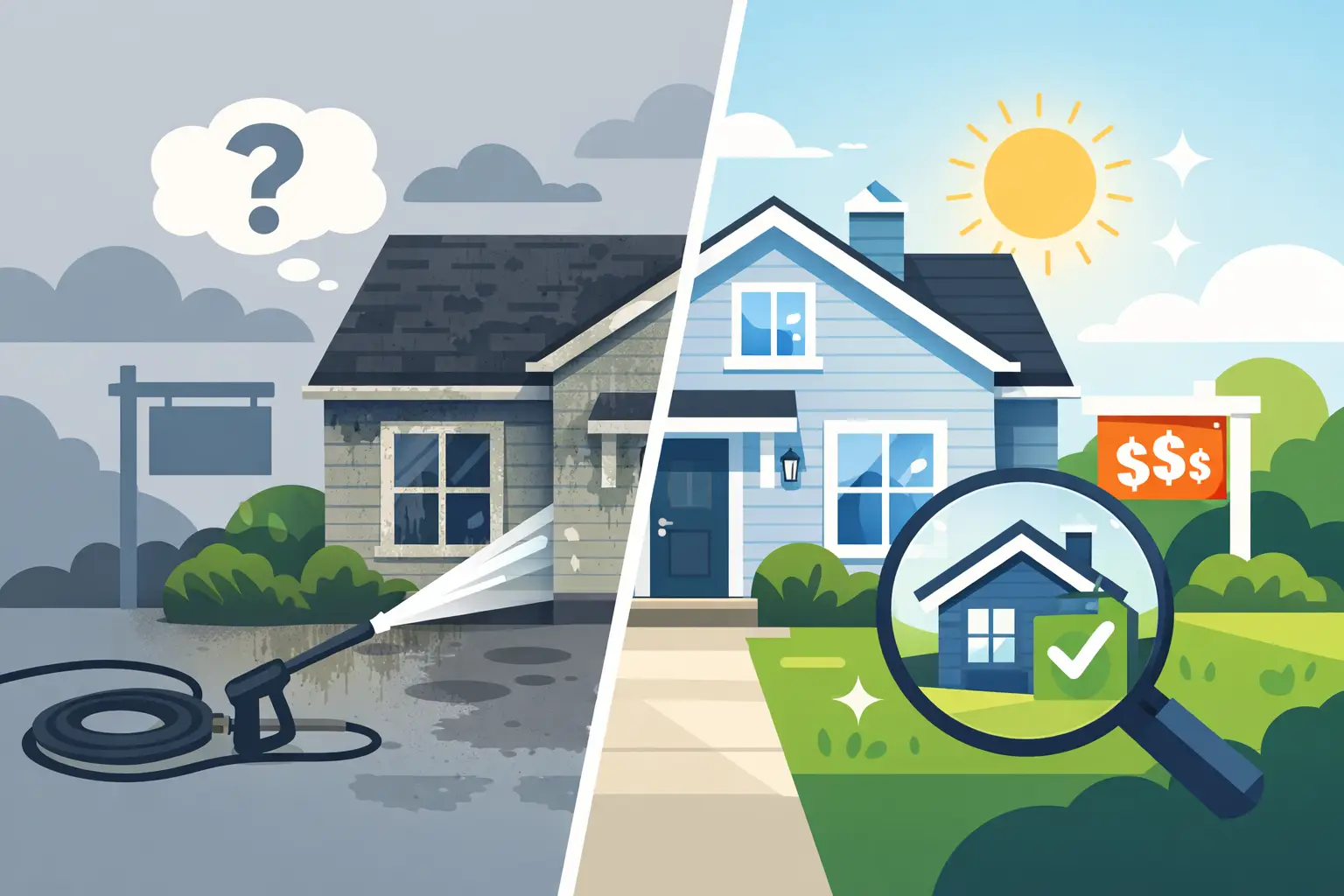
A clean exterior does more than improve appearance. It protects materials, supports property value, and makes the whole home feel better maintained. When the stains, streaks, and buildup start adding up, the smartest next step is a professional assessment that tells you exactly what your property needs – and nothing it does not.




Leave a Reply