
The smell usually hits first. Then you see dark water around a floor drain, toilet base, or basement edge and realize this is not a simple plumbing mess. If you are searching for how to remove sewage backup, the first priority is not scrubbing faster – it is protecting your health, stopping more contamination, and making sure the affected area is cleaned the right way.
Sewage backup is different from ordinary water damage because the water may contain bacteria, viruses, parasites, and chemicals. It can soak into flooring, drywall, baseboards, furniture, and stored items fast. For homeowners and property managers in Baltimore County, that means the cleanup decision matters not just for appearance, but for safety, odor control, and preventing longer-term damage.
How to remove sewage backup without making it worse
The biggest mistake people make is treating sewage like a normal spill. Mopping a little and spraying deodorizer might make the room look better for a few hours, but contamination can remain in porous materials and hidden cavities.
Start by keeping people and pets out of the area. If the water is near electrical outlets, appliances, or your breaker panel, do not step into it until power to that area is safely shut off. If you are not sure how to do that safely, wait for a professional. Sewage cleanup is not worth risking electrocution.
Next, stop the source if you can. That may mean shutting off the main water line if fixtures are overflowing, avoiding all water use in the building, or calling a plumber if the line is blocked or broken. Cleanup should not begin until the backup has stopped. Otherwise, you are chasing a problem that keeps spreading.
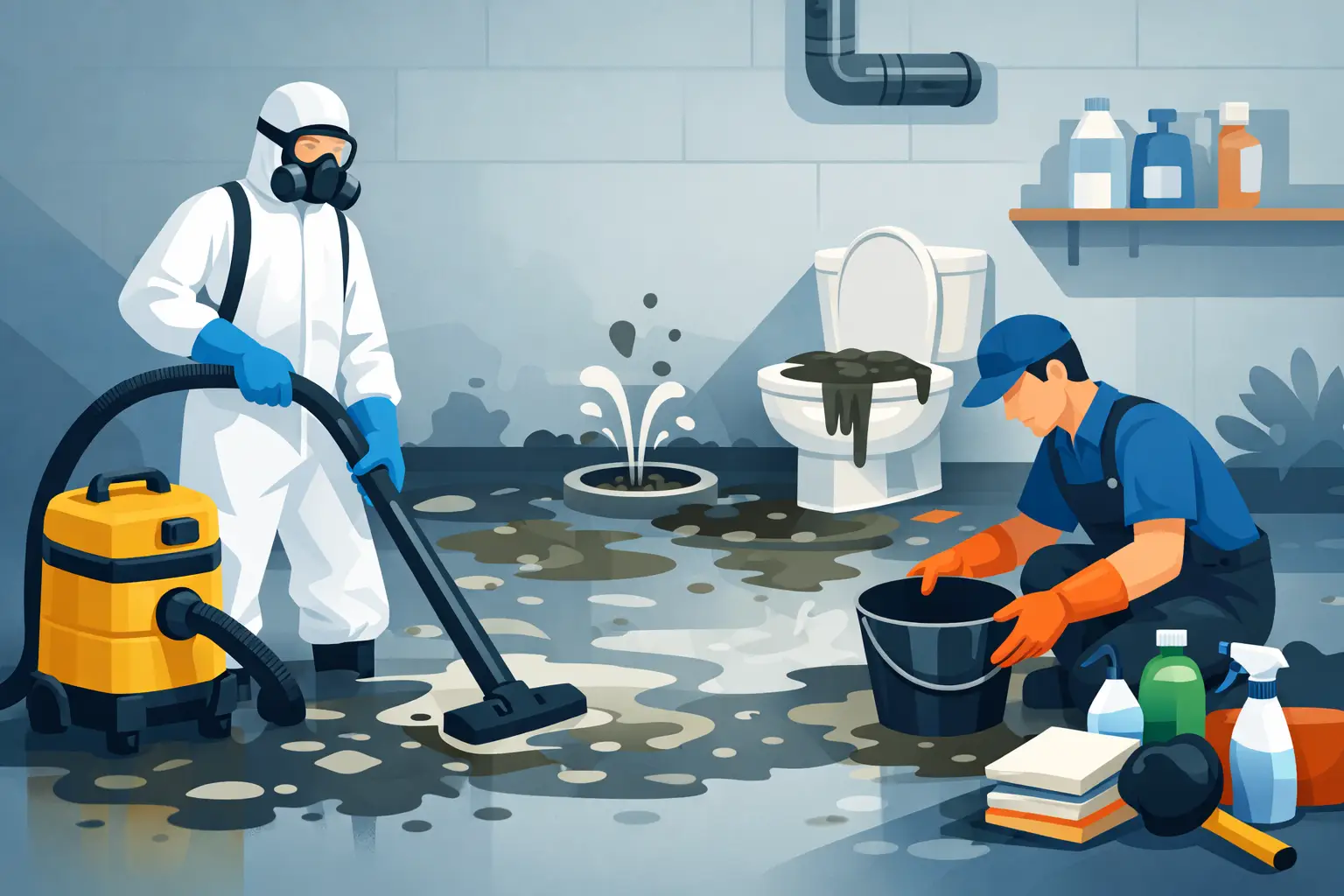
Once the area is stable, put on proper protective gear. At a minimum, that means waterproof gloves, rubber boots, eye protection, and a respirator or mask suited for contaminated environments. Regular house cleaning gloves and a cloth face covering are not enough for a serious sewage event.
What you can clean and what should be removed
It depends on how much sewage is present, how long it sat, and what materials were affected. Non-porous surfaces like concrete, tile, metal, and some sealed surfaces can often be cleaned and disinfected thoroughly. Porous materials are a different story.
Carpet, carpet pad, insulation, particle board, ceiling tiles, upholstered furniture, mattresses, and drywall that absorbed sewage usually need to be removed and discarded. Even if they seem dry on the surface, contamination can remain deep inside. Trying to save everything often leads to lingering odor, microbial growth, and repeat cleanup costs later.
Hardwood flooring is a gray area. If sewage stayed on the surface briefly and cleanup started quickly, some sections may be salvageable. But if wastewater seeped between boards or under the floor, removal may be necessary. The same goes for cabinets and trim. The right answer depends on material type, exposure time, and whether proper drying equipment can reach the affected layers.
Safe cleanup steps for minor sewage backup
If the backup is very limited, the source is fixed, and contamination is confined to cleanable surfaces, you may be able to handle a small portion of the cleanup yourself. Use a wet vacuum only if it is designed for contaminated water and you are prepared to disinfect the machine afterward. Never use a regular household vacuum.
Remove standing water first. Then shovel or scoop solid waste into heavy-duty trash bags. Work slowly to avoid splashing. Once solids and water are out, wash affected hard surfaces with hot water and detergent. This step matters because disinfectants do not work well through dirt and residue.
After cleaning, apply an appropriate disinfectant according to the product label and required dwell time. Wiping it off too quickly reduces effectiveness. Ventilate the area as much as possible by opening windows if weather allows and using air movement carefully. Drying should begin immediately to reduce further damage and help control odor.
Anything used during cleanup – rags, disposable PPE, cardboard, and contaminated small items – should be bagged and discarded properly. Wash your hands and exposed skin thoroughly after leaving the area, even if you wore gloves.
When professional sewage cleanup is the smart call
There are times when DIY is simply not the safe or cost-effective choice. If sewage affected more than a small area, entered a basement, soaked carpet or drywall, sat for more than a few hours, or came from a main sewer line, professional restoration is usually the right move.
The reason is simple. Proper sewage removal is not just about extracting visible water. It involves containment, disposal of unsalvageable materials, deep cleaning, disinfection, structural drying, moisture testing, and odor treatment. Without commercial drying equipment and experience, it is easy to miss what is happening behind walls or under floors.
This is especially important in finished basements, rental properties, and commercial spaces where hidden contamination can lead to occupant complaints, damaged materials, and insurance issues. A trained restoration team can also document the loss, which may help if you are filing a claim.
For local property owners, fast response matters. Sewage does not improve with time, and delays usually mean more demolition, more odor, and higher restoration costs.
How to remove sewage backup odors for good
Odor is one of the reasons homeowners underestimate the scope of the problem. If the smell remains after cleanup, there is usually a reason. It may be trapped in porous materials, under flooring, inside wall cavities, or in HVAC components exposed to contaminated air.
Air fresheners are not a fix. Neither are candles or fragrance sprays. Those products may cover the smell for a short time, but they do not remove the source. Lasting odor control comes from removing contaminated materials, cleaning all affected surfaces, drying thoroughly, and treating the area with the right professional deodorization methods when needed.
If your HVAC system ran during the backup, that is worth checking too. In some cases, ducts near the affected area can circulate unpleasant odor or fine particles through the home. The answer depends on where the backup occurred and whether the system was exposed.
Common mistakes homeowners make after a sewage backup
One common mistake is waiting to see if the area dries on its own. Another is keeping wet carpet pad or drywall because it “doesn’t look that bad.” Sewage contamination is not always visible after the water is gone.
People also tend to use too much bleach without cleaning first or without understanding the surface they are treating. Bleach has limits, especially on dirty or porous materials, and it can damage some finishes. More chemical does not automatically mean safer cleanup.
Another issue is not addressing the root cause. A blocked line, tree root intrusion, damaged sewer pipe, or storm-related overload can cause repeat backups. Cleanup solves the immediate damage, but the plumbing issue still needs attention.
Protecting your property after cleanup
Once the damaged area has been cleaned and dried, it is worth thinking about prevention. If your property has had a sewage event before, ask whether a backwater valve, sump pump upgrade, drain maintenance plan, or plumbing inspection makes sense. Older homes and lower-level spaces can be more vulnerable, especially during heavy rain or municipal system overload.
For landlords and property managers, a quick professional response also protects tenant relationships and reduces downtime. For homeowners, it protects flooring, stored belongings, indoor air quality, and long-term property value. Sewage damage is one of those problems where doing the minimum often leads to paying twice.
If you need a local team that understands emergency cleanup, drying, and restoration, Superior Cleaning Solutions serves Baltimore County with responsive service and straightforward recommendations based on the actual condition of the property.
A practical answer to how to remove sewage backup
The safest answer to how to remove sewage backup is this: stop the source, avoid exposure, remove contaminated water and materials correctly, disinfect what can truly be saved, and dry the space completely. If the backup is more than minor, or if porous materials were affected, bringing in a restoration professional is often the fastest path to a clean, safe space again.
When sewage enters your home or building, speed matters – but doing it right matters more. The goal is not just to make the mess disappear. It is to make the property healthy, dry, and ready to use with confidence.





Leave a Reply