
When your hardwood floors still look dull after regular mopping, the problem usually is not the wood – it is the buildup. Hardwood floor deep cleaning targets the ground-in dirt, sticky residue, and cloudy film that routine cleaning leaves behind. For homeowners and property managers in Baltimore County, that kind of service can make a high-traffic floor look noticeably cleaner without jumping straight to sanding or refinishing.
What hardwood floor deep cleaning actually does
A deep clean goes beyond surface dust and footprints. Over time, hardwood collects fine grit, cleaner residue, oils from shoes, pet mess residue, and everyday grime that settles into the texture of the floor and around board edges. Even well-maintained floors can start to look flat, streaky, or older than they really are.
Professional hardwood floor deep cleaning is designed to lift that buildup safely. The goal is to clean the floor thoroughly without oversaturating it, scratching the finish, or using harsh products that leave behind more residue than they remove. When done correctly, the floor looks brighter, feels cleaner underfoot, and is easier to maintain afterward.
That matters for more than appearance. Dirt and grit act like sandpaper on a hardwood finish. The longer they stay in place, the faster the wear shows up in traffic lanes, entryways, kitchens, hallways, and common areas.
Signs your floors need more than a mop
A lot of property owners assume their floors are simply old when the real issue is buildup. If the finish looks cloudy, the color seems muted, or the floor feels tacky after cleaning, a standard mop-and-bucket approach is probably not enough.
Another clear sign is uneven appearance. If some sections shine while others look gray or dirty no matter how often they are cleaned, that usually points to embedded soil and product residue. Homes with pets, kids, frequent guests, or direct access from outside tend to see this faster, especially in Baltimore County where seasonal moisture, pollen, salt, and tracked-in debris all take a toll.
You may also notice dark lines along the seams, grime collecting near baseboards, or footprints showing up almost immediately after cleaning. Those are common signs that the floor needs a more thorough process.
Why DIY hardwood floor deep cleaning often falls short
Most DIY floor problems start with good intentions. A homeowner wants cleaner floors, grabs an off-the-shelf product, uses extra solution, and expects extra cleaning power. What often happens instead is residue buildup, haze, or moisture exposure that can create bigger issues over time.
Hardwood is not a one-size-fits-all surface. Solid hardwood, engineered hardwood, factory-finished boards, and older site-finished floors can all respond differently to moisture and cleaning products. The finish matters just as much as the wood itself. A method that seems harmless on one floor can dull another or leave behind a film that attracts more dirt.
Steam mops are a common example. Many people use them because they seem convenient and sanitary, but heat and moisture are a risky combination for hardwood. Excess water can work into seams, edges, and small finish breaks. Even if damage is not obvious right away, repeated exposure can shorten the life of the floor.
How professional hardwood floor deep cleaning works
The safest approach starts with identifying the floor type and condition. A professional should look at the finish, note any worn spots, and choose a cleaning method that removes buildup without pushing water into the wood. This is where experience matters. Cleaning hardwood well is not about flooding the floor and hoping for the best. It is about controlled cleaning, proper agitation, and effective extraction.
In many cases, the process begins with dry soil removal. Fine grit and debris need to come off the surface before wet cleaning starts. If that step is rushed, loose particles can scratch the finish during the rest of the service.
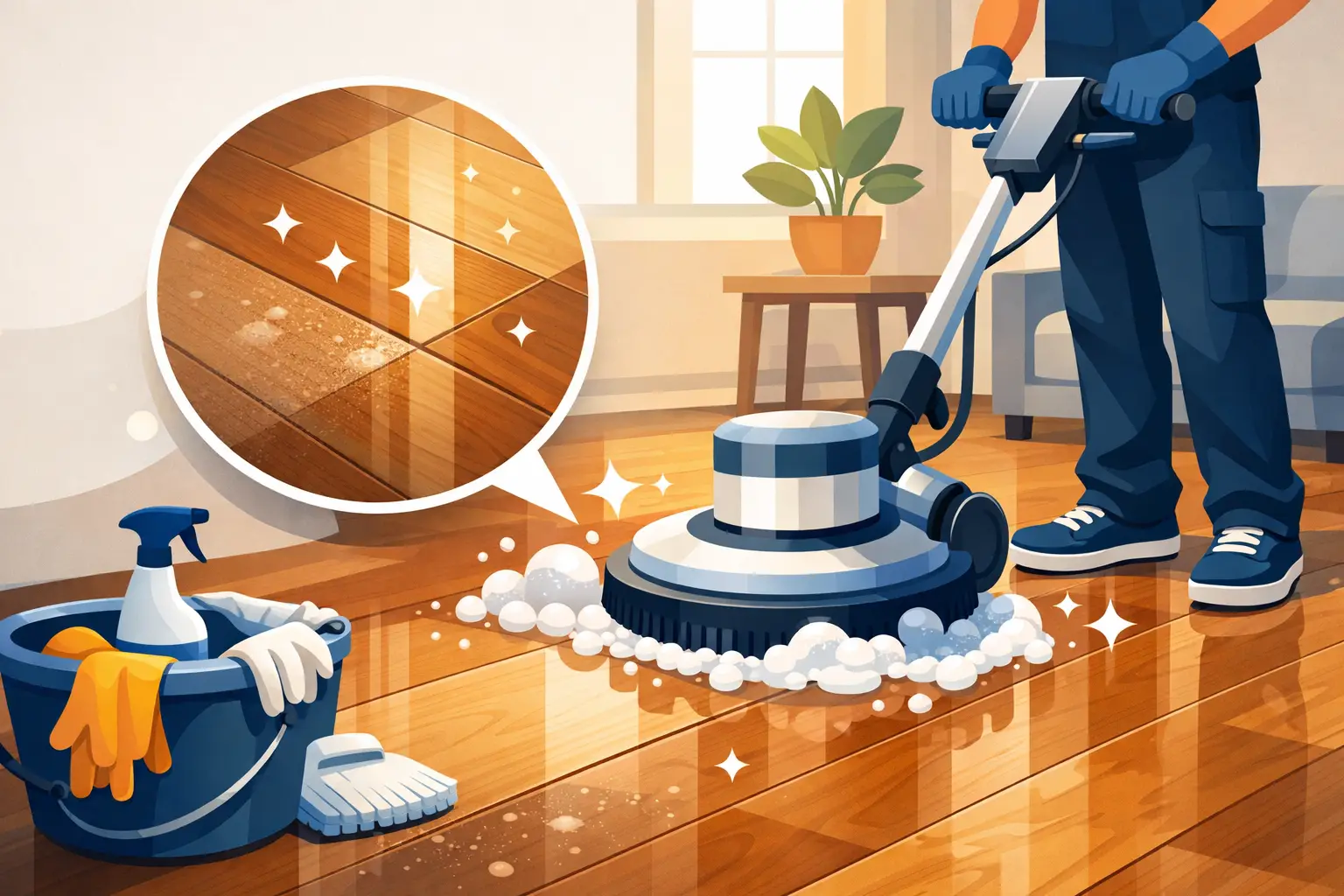
From there, specialized equipment and wood-safe cleaning solutions are used to break down residue and embedded grime. The right process lifts contaminants from the surface while keeping moisture exposure low. Heavily traveled areas may need extra attention, especially near entry points, kitchen work zones, and pet areas.
A quality service also pays attention to detail. Corners, edges, and transitions between rooms should not be ignored. Those are often the places where dirt builds up the most and where amateur cleaning leaves a visible line.
What results you should expect
A deep cleaning can dramatically improve the look of hardwood floors, but it is important to be realistic. Cleaning removes soil and residue. It does not reverse deep scratches, sun fading, missing finish, or water damage. If a floor has permanent wear, deep cleaning will make it cleaner and more presentable, but it will not make structural or finish damage disappear.
That said, many floors look much better after professional cleaning than owners expect. Once the film is removed, the natural color and character of the wood show up again. The floor may reflect light better, feel smoother, and stop looking dingy in traffic paths.
For rental properties, home listings, and commercial spaces, this can be especially valuable. A professionally cleaned hardwood floor helps the entire property feel better maintained. It is one of those upgrades people notice right away, even if they cannot explain exactly why the room suddenly looks fresher.
When cleaning is enough and when it is not
This is where honest guidance matters. Not every dull hardwood floor needs refinishing, and not every worn floor can be fixed with cleaning alone. If the issue is mostly surface grime, residue, and light traffic buildup, deep cleaning is often the right call. It is faster, less disruptive, and more affordable than a full restoration process.
If the finish is worn through to bare wood in major areas, or if there are deep gouges, black water stains, or widespread discoloration, cleaning may only offer partial improvement. In those cases, the better long-term answer may be screening, recoating, repair, or refinishing.
A trustworthy provider should tell you the difference. That kind of transparency matters because homeowners do not want to pay for the wrong service. They want straightforward recommendations, visible results, and no guesswork.
How often should hardwood floors be deep cleaned?
It depends on how the property is used. In a quieter home with no pets and limited foot traffic, deep cleaning may only be needed occasionally. In a busy household with children, dogs, frequent entertaining, or direct outdoor access, floors may benefit from professional attention much sooner.
Property managers should think in terms of wear patterns, not just time. Entryways, hallways, living rooms, offices, and common areas usually need more frequent service than guest rooms or low-use spaces. If the floor starts losing its clean appearance shortly after routine maintenance, that is often the right time to schedule a deeper clean.
For many homes and light commercial properties, periodic professional service is a smart preventive step. It helps preserve the finish, improves appearance, and reduces the chance that accumulated grit will cause faster wear.
Choosing the right local company for hardwood floor deep cleaning
Not every cleaning company handles hard surface floors with the same level of care. Hardwood requires the right equipment, the right cleaning solutions, and technicians who understand how to clean thoroughly without over-wetting or damaging the finish.
Look for a company that offers clear communication, upfront pricing, and experience with floor cleaning beyond basic janitorial work. Reviews matter here because homeowners want proof that the company shows up on time, treats the property respectfully, and delivers the kind of before-and-after difference that makes the service worth scheduling.
For Baltimore County homeowners and property managers, convenience matters too. Working with a trusted local company that can handle multiple cleaning needs is often the easiest route, especially when floor cleaning is part of a larger property refresh. Superior Cleaning Solutions approaches hardwood floor deep cleaning with that same service-first mindset – professional equipment, honest recommendations, and results you can actually see.
If your hardwood floors are clean on the surface but still do not look their best, that is usually your sign to stop scrubbing harder and start cleaning smarter. A proper deep clean can bring back the look you thought was gone and help your floors hold up better in the months ahead.






Leave a Reply