
Those black streaks spreading down your roof are more than a curb appeal issue. In Baltimore County, humid summers, shaded tree cover, and seasonal moisture create ideal conditions for algae, moss, mildew, and lichen. The best methods for roof stain removal clean that growth at its source without stripping shingle granules, flooding vulnerable areas, or creating unnecessary damage.
For most asphalt shingle roofs, the answer is not more pressure. It is the right cleaning solution, applied carefully at low pressure, with a plan to protect your landscaping, gutters, siding, and roof system.
What Is Causing the Stains on Your Roof?
The dark streaks seen on many Maryland roofs are commonly caused by a type of blue-green algae. It thrives where moisture lingers and can feed on the limestone filler used in many asphalt shingles. On north-facing roof slopes and areas under trees, you may also see moss, lichen, or a thicker green buildup.
Each type of growth behaves differently. Algae often creates flat black streaks. Moss looks fuzzy or leafy and holds moisture against the roof surface. Lichen forms stubborn, crusty patches that attach tightly to shingles. A roof can have more than one problem at the same time, which is why a one-size-fits-all cleaning approach is rarely the right call.
Stains do not always mean a roof is failing. However, moss and lichen can lift shingle edges, trap moisture, and accelerate wear when left in place. Cleaning also gives you a clearer view of missing granules, cracked shingles, damaged flashing, and clogged gutters that need attention.
Best Methods for Roof Stain Removal
Soft washing is the preferred professional method
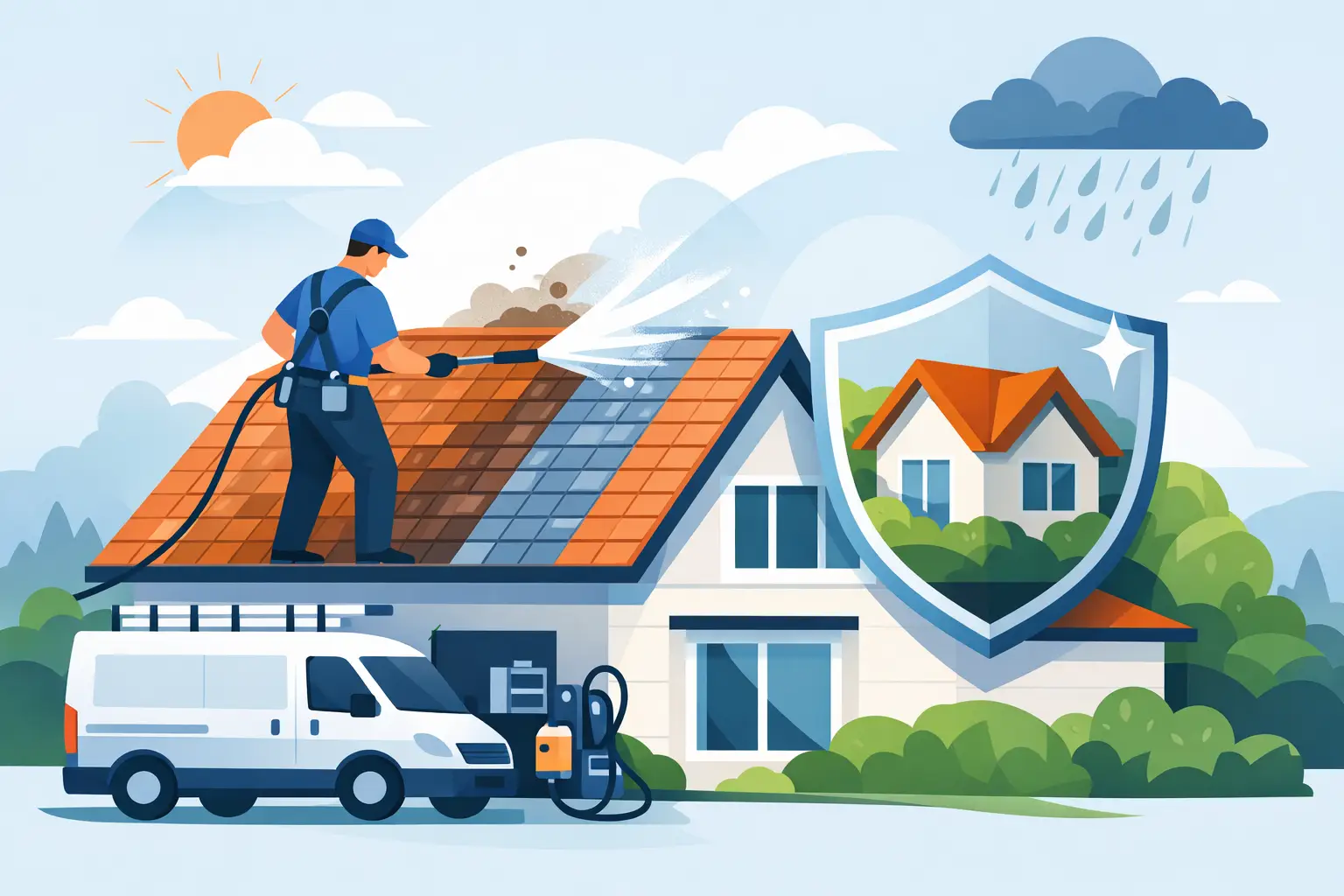
Soft washing is the safest, most effective choice for most asphalt shingle roofs. A trained technician applies a roof-appropriate cleaning solution at low pressure, allowing it to kill algae, moss, mildew, and other organic growth. The solution does the cleaning work, not the force of the water.
This matters because shingles depend on their protective granule layer. High pressure can blast away granules, loosen shingle edges, drive water beneath the roof covering, and shorten the roof’s service life. A roof may look clean immediately after aggressive pressure washing, but the hidden damage can cost far more than the cleaning.
A proper soft-wash service begins with assessing the roof material, age, slope, buildup level, and surrounding vegetation. Technicians protect plants by pre-wetting them, controlling runoff, and rinsing thoroughly after treatment. They also use controlled application methods that avoid overspray on siding, decks, windows, and outdoor furnishings.
Some staining clears quickly. Heavier moss and lichen may release gradually after the treatment has neutralized the growth. That is normal. Scraping aggressively to force an instant result can damage shingles, so patience is often part of doing the job correctly.
Manufacturer-approved chemical treatment can work for small areas
For a small, accessible patch of algae on a roof that is otherwise in good condition, a homeowner may consider a manufacturer-approved roof-cleaning solution. The product must be compatible with the specific roofing material, and the instructions need to be followed exactly.
This option has real limits. Working on a roof creates fall hazards, chemical handling requires care, and improper runoff control can harm landscaping. Avoid experimenting with concentrated cleaners, mixing chemicals, or using household products that are not intended for roofing. Never mix bleach with ammonia, acids, or other cleaners.
If you choose a do-it-yourself treatment, use a low-pressure garden sprayer from a stable position when possible. Do not walk on a wet roof, and do not scrub shingle surfaces with stiff brushes. If the stains cover a large area, the roof is steep, or moss is established, professional service is the safer investment.
Gentle manual removal has a limited role
Loose debris, small branches, and light surface moss can sometimes be removed carefully with a soft brush or a leaf blower used from a safe position. The goal is to remove material sitting on top of the roof, not to scrape growth out of the shingle surface.
Manual cleaning does not kill the underlying algae or lichen. It can also tear shingles or dislodge granules if done too aggressively. Think of it as preparation or maintenance, not a replacement for a targeted roof treatment.
Roof replacement is sometimes the honest answer
Cleaning cannot restore shingles that are at the end of their useful life. If a roof has widespread granule loss, curling, brittle shingles, active leaks, or extensive damage beneath moss growth, treatment alone may not be appropriate. A reputable cleaning company should tell you when a roof inspection or roofing professional is needed instead of promising a result that will not last.
What Not to Do to a Stained Roof
Pressure washing is the biggest mistake homeowners make with asphalt shingles. Even a pressure washer set to a lower setting can be too aggressive when used incorrectly. The water stream can remove the protective surface layer and force water under shingles or into roof penetrations.
Avoid harsh wire brushes, abrasive pads, and repeated scraping as well. These methods may remove visible growth, but they can leave the roof more vulnerable to weather. Skip the temptation to use a quick coating or paint to cover stains. Covering the problem does not remove the organic growth, and some coatings may interfere with the roof’s designed performance.
It is also wise to avoid cleaning a roof during freezing conditions, high winds, heavy rain, or extreme summer heat. Safety and solution performance both suffer when conditions are poor.
Protecting Landscaping During Roof Cleaning
Homeowners often worry about their shrubs, flowers, and lawn during roof stain removal, and they should. The safest cleaning process treats plant protection as part of the job, not an afterthought.
Before cleaning begins, nearby vegetation should be thoroughly watered. Plants are monitored throughout the service, and runoff paths should be managed carefully. After the roof is treated, affected areas are rinsed again. Sensitive landscaping, ponds, outdoor kitchens, painted surfaces, and solar equipment may require additional protection or a modified approach.
Ask your cleaning provider how they protect plants and where roof runoff will go. A clear answer is a sign that the company understands exterior cleaning beyond simply applying a solution to the roof.
How Long Do Results Last in Baltimore County?
Results depend on shade, roof orientation, tree coverage, moisture, and the type of growth present. A properly treated roof can stay noticeably cleaner for years, but homes surrounded by mature trees or located in consistently damp areas may need maintenance sooner.
Preventive steps help extend the result. Keep gutters flowing so water does not back up at roof edges. Trim branches that shade the roof or drop leaves and debris. Remove accumulated debris after storms, and address drainage issues that keep roof sections damp. Zinc or copper strips near the ridge may help limit future algae growth on some roofs, but they are not a substitute for cleaning and their effectiveness varies by roof design and rainfall patterns.
When to Call a Professional Roof Cleaner
Professional help is the right choice when staining covers large sections, moss is lifting shingles, the roof is steep or difficult to access, or you want the job completed without risking your landscaping or roof surface. It is also the practical option for busy homeowners and property managers who need a dependable result without spending a weekend on a ladder.
At Superior Cleaning Solutions, roof cleaning is approached as part of full-property care. A clean roof pairs naturally with gutter cleaning, house washing, concrete cleaning, and deck care to give the entire property a refreshed, well-maintained appearance. Before scheduling, request an upfront quote and ask what method is recommended for your roof material.
A stained roof does not need to become a permanent eyesore or a risky weekend project. The right low-pressure treatment can restore the clean, cared-for look of your home while helping you make smarter decisions about ongoing roof maintenance.



Leave a Reply