
A pet accident can look minor at first: a small yellow spot near the sofa, a damp corner in a bedroom, or a lingering smell that seems to return after every humid Baltimore County afternoon. The right carpet cleaner can make a real difference, but a carpet cleaner review for pet stains needs to look beyond surface appearance. A product that brightens the carpet but leaves urine residue underneath can invite repeat accidents and leave your home smelling less than fresh.
For busy homeowners, landlords, and property managers, the goal is not simply to hide a stain. It is to remove the source, protect the carpet, and get the room back to looking and smelling clean.
What Makes Pet Stains Different From Ordinary Carpet Dirt?
Pet stains are more difficult than tracked-in mud or a spilled drink because they often contain organic residue, proteins, bacteria, and odor-causing compounds. Urine can travel through the carpet pile, into the backing, and sometimes into the pad below. By the time a stain is visible, the affected area may be larger than it appears.
That is why fragrance-heavy sprays often disappoint. They may cover the odor temporarily, but they do not necessarily break down the residue that causes it. When moisture or humidity returns, so can the smell. In a home with dogs, cats, children, or frequent guests, that is a problem worth solving correctly the first time.
Carpet Cleaner Review for Pet Stains: What Actually Works
The best option depends on the age of the stain, the carpet fiber, and whether odor is still present. No single cleaner is perfect for every situation, but there are clear differences between the most common approaches.
Enzyme Cleaners for Fresh Organic Accidents
Enzyme-based spot treatments are usually the strongest first choice for fresh urine, vomit, or feces stains. These formulas are designed to break down organic matter instead of simply masking it. Used properly, they can reduce discoloration and help prevent lingering odors that encourage pets to revisit the same area.
The trade-off is patience. Enzyme cleaners need adequate contact time to work. Applying a little spray, blotting it up immediately, and expecting a full result is a common mistake. Follow the product instructions, keep the area from drying too quickly if directed, and blot rather than scrub.
Enzyme products are helpful for small, recent accidents. They are less reliable when the stain has soaked deep into padding, dried repeatedly, or been treated with several other chemicals already.
Portable Carpet Extractors for Surface Stains
Portable carpet cleaning machines can be useful for homeowners with young pets or recurring accidents. Their main benefit is extraction: they apply cleaning solution and pull moisture and loosened soil back out of the carpet. That is far more effective than rubbing a stain with a towel.
For fresh stains near the surface, a quality portable extractor can produce a noticeable improvement. Still, these machines have limitations. Most consumer units do not have the suction power, water temperature, or recovery capacity of professional equipment. If too much solution is left behind, the carpet can stay damp longer, potentially contributing to odor or rapid re-soiling.
Use a portable machine with restraint. Avoid repeated soaking passes, and make sure the area dries fully. Fans, open airflow, and dehumidification can help, especially during Maryland’s humid months.
Store-Bought Foam and Spray Cleaners
Foam and spray cleaners are convenient, inexpensive, and easy to keep on hand. They can work well for a fast response to a small stain, particularly when paired with careful blotting. For a light surface mark, convenience matters.
The downside is residue. Some products leave soap or sticky material in the fibers, which can attract dirt after the area dries. Others contain strong fragrances that make it difficult to tell whether the source of the odor has actually been removed. Before using any new cleaner, test it in a hidden area to check for color change or texture damage.
Professional Hot Water Extraction for Set-In Stains
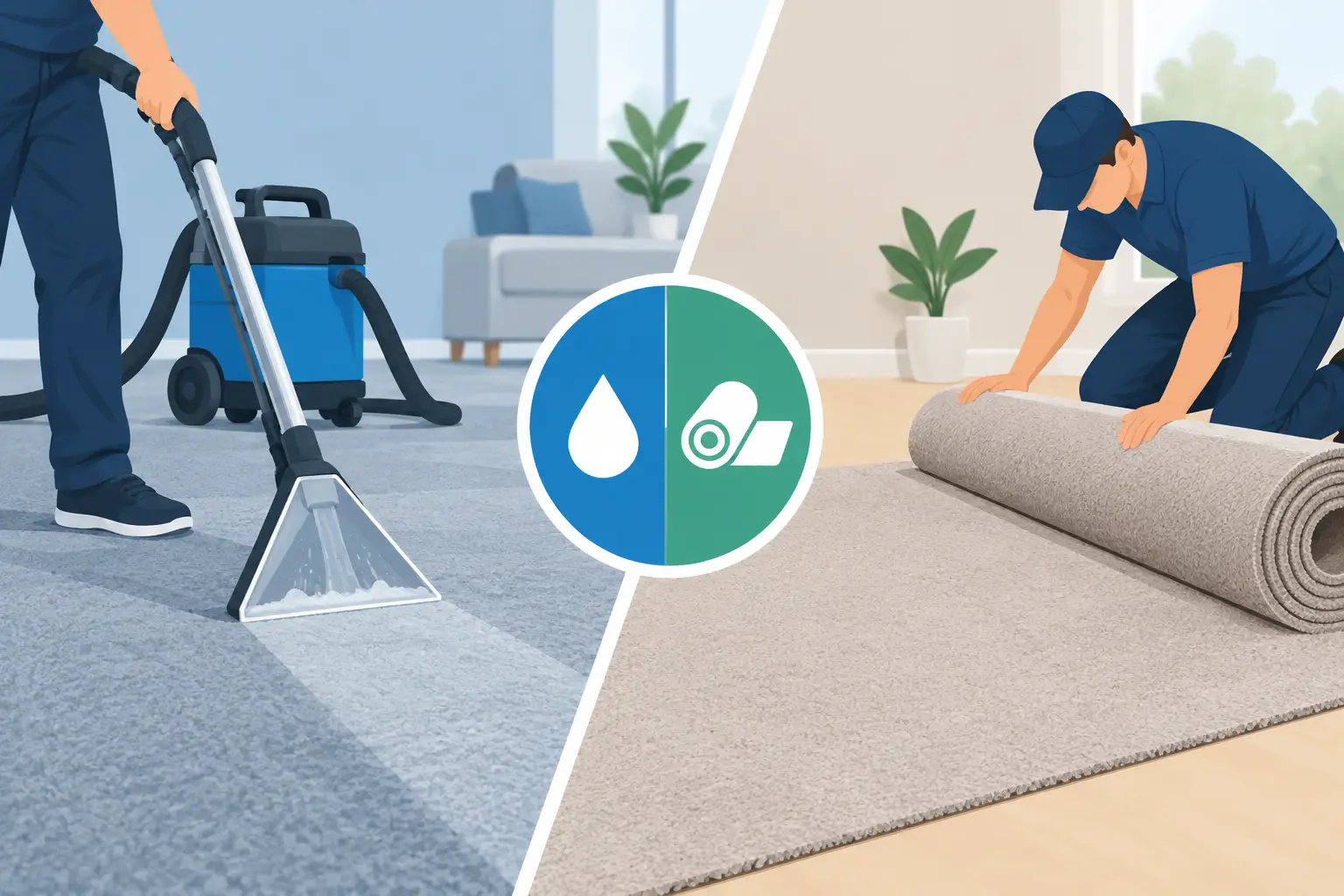
When pet stains are old, widespread, or odorous, professional carpet cleaning is usually the more dependable answer. Hot water extraction reaches deeper into carpet fibers than a household spot cleaner and removes suspended soil and cleaning residue through powerful vacuum recovery.
A professional technician can also assess whether the stain is limited to the carpet or has reached the backing and pad. That distinction matters. Deep contamination may require targeted odor treatment in addition to cleaning. Honest guidance is part of a quality service – some severely damaged areas may need more than a standard cleaning to fully resolve the odor.
The Right Way to Treat a Fresh Pet Accident
Fast action gives you the best chance of avoiding a permanent mark. Start by picking up solid material carefully, if needed, then blot the affected area with clean white towels. Press firmly to absorb moisture, but do not rub. Rubbing spreads contamination and can push it deeper into the carpet fibers.
Apply an appropriate enzyme treatment according to the label directions. Avoid combining cleaning products, especially ammonia-based products, bleach, and other strong chemicals. Mixing products can damage carpet fibers, create harsh fumes, or interfere with the treatment process.
After treatment, blot away excess moisture and allow the carpet to dry completely. If the odor remains after the area is dry, do not keep adding more and more product. That is the point where a professional evaluation can save time, protect the carpet, and prevent a small issue from becoming a recurring one.
Common Mistakes That Make Pet Odors Worse
The most expensive pet-stain mistakes often begin with good intentions. Scrubbing aggressively can fray carpet fibers and spread the stain. Overwetting with a rental machine or too much solution can send moisture deeper into the pad. Using a heavily scented cleaner can make a room smell temporarily better while leaving the original contamination behind.
Heat can also create problems with some protein-based stains. Hot water is valuable in a controlled professional process, but homeowners should not pour boiling water onto carpet. It can set certain stains, affect dyes, and damage adhesives beneath the carpet.
Another common issue is treating only what the eye can see. Urine stains frequently extend beyond the visible edge. If the smell is strongest in one area but the carpet looks clean, a deeper treatment may still be necessary.
When It Is Time to Call a Professional Carpet Cleaner
A professional visit makes sense when you notice repeat odor, dark yellowing, multiple accident areas, stains in high-traffic rooms, or contamination that has reached upholstery, rugs, or carpeted stairs. It is also a smart choice before listing a home, welcoming a new tenant, or hosting family and guests.
For Baltimore County homes, professional service can be especially valuable after a long winter indoors or a humid summer when odors become more noticeable. Clean carpet supports a healthier-feeling home, improves appearance, and helps preserve a significant investment in flooring.
Superior Cleaning Solutions uses professional-grade equipment and tailored treatment methods to address more than the visible spot. The focus is on thorough cleaning, practical recommendations, and clear upfront service so homeowners and property managers can make confident decisions about their space.
Protecting Carpet Between Professional Cleanings
A consistent routine helps extend the results of deep cleaning. Vacuum regularly to remove dry soil that can grind into fibers. Keep an enzyme cleaner and white absorbent towels available for quick response. If your pet has a favorite accident spot, consider limiting access temporarily while addressing the cause, whether it is a training issue, stress, or a possible health concern.
For households with multiple pets, scheduled professional carpet cleaning can be a practical part of home maintenance rather than a last-minute fix. The right timing depends on traffic, pet activity, carpet color, and how quickly stains are addressed.
A cleaner carpet should not come with guesswork or a cover-up scent. If pet stains keep returning, treat the source beneath the surface and give your home the fresh, cared-for feel it deserves.



Leave a Reply