
A breezeway can set the tone for an entire apartment community. When residents and visitors walk past stained concrete, slippery algae, cobwebs, and overflowing debris, the property feels neglected before they ever reach a front door. Knowing how to clean apartment breezeways correctly helps property managers protect curb appeal, reduce slip hazards, and keep common areas looking cared for.
For Baltimore County properties, the challenge is more than dust. Humid summers, leaf-heavy fall weather, winter de-icing products, and spring pollen can leave breezeways dirty fast. The right process removes the buildup without damaging painted surfaces, doors, railings, light fixtures, or nearby landscaping.
Start With Safety and a Site Walkthrough
A thorough breezeway cleaning starts before any water or cleaning solution is applied. Walk the area and identify stained sections, standing water, loose debris, damaged concrete, peeling paint, blocked drains, and areas with visible algae or mildew. This inspection helps determine whether the surface needs routine washing, a targeted treatment, or professional pressure washing.
Safety matters because breezeways are shared walkways. Schedule work during lower-traffic hours when possible, post clear wet-floor signage, and keep residents away from the active cleaning area. If the breezeway has electrical outlets, exposed wiring, decorative lighting, security cameras, or doorbell equipment, protect them from water before cleaning begins.
Pay close attention to drainage. Water should move toward drains or approved runoff areas, not pool at apartment entries, stairwells, elevator landings, or garage access points. A dirty breezeway is frustrating, but a wet, slippery one creates a much bigger liability concern.
How to Clean Apartment Breezeways Step by Step
The best approach depends on the materials present. Many apartment breezeways combine concrete or pavers with painted walls, metal railings, vinyl trim, entry doors, and glass. Treating every surface with the same pressure setting or chemical can cause expensive damage.
Clear loose debris first
Sweep or blow out leaves, dirt, cigarette waste, gravel, cobwebs, and mulch before washing. This prevents debris from becoming muddy runoff and clogging drains. Do not skip corners, along railings, around door thresholds, under stair landings, and behind utility boxes. These overlooked areas are where damp organic material often collects and encourages mildew growth.
Bag and remove trash rather than pushing it into landscape beds or drainage areas. If dumpsters or trash enclosures are nearby, clean them separately so grease and waste residue do not spread back onto the walkway.
Pre-treat algae, mildew, and dark staining
Green or black growth on concrete is more than an appearance issue. It can make a walking surface slick, especially after rain. Apply a surface-appropriate cleaning solution to affected areas and allow adequate dwell time according to the product instructions. The solution needs time to break down organic growth before rinsing.
Use a milder cleaning method near painted siding, stucco, wood, vinyl, and decorative finishes. Strong chemicals or an overly aggressive mix can discolor surfaces, kill nearby plants, or leave streaks that are harder to correct than the original staining. For properties with persistent mildew, recurring shaded areas, or sensitive exterior materials, professional soft washing is often the safer choice.
Wash concrete with controlled pressure
Concrete breezeways usually respond well to professional pressure washing, but more pressure is not always better. The goal is an even clean, not etched lines or visible wand marks. A surface cleaner is often the best tool for large concrete walkways because it provides consistent coverage and reduces striping.
Use lower pressure around cracks, spalled concrete, failing caulk, expansion joints, painted markings, and older surfaces. Pressure can force water into weak areas or remove loose material. Grease stains, rust spots, gum, and tire marks may need specialized treatment before or after the main wash.
Keep the spray moving in smooth, overlapping passes. Holding a pressure-washing wand too close to one spot can scar concrete permanently. For multi-level buildings, avoid directing water toward doors, vents, window seals, or neighboring units.
Clean vertical surfaces separately
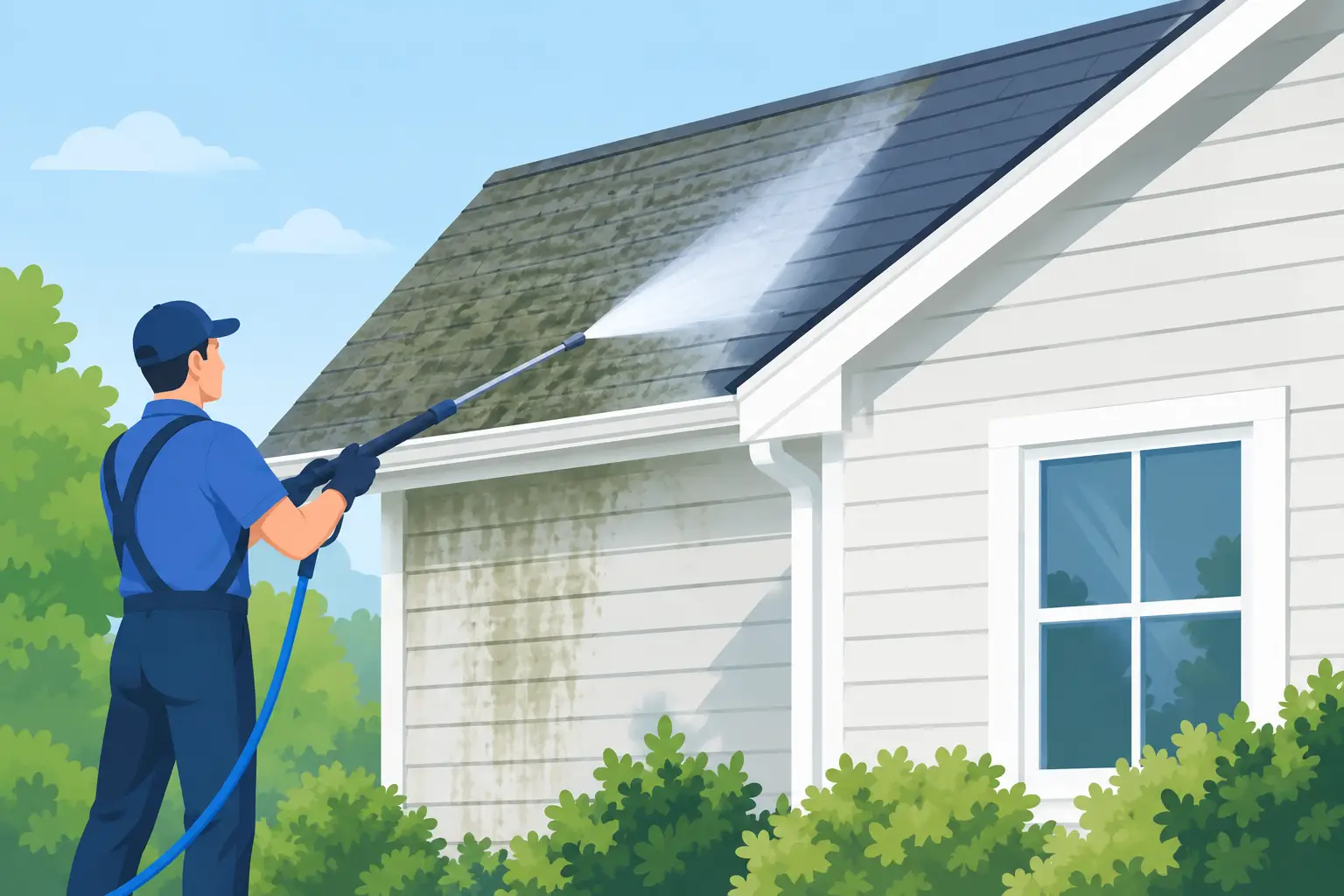
Walls, stair risers, railings, handrails, door frames, and trim typically require a gentler process than concrete. Soft washing or low-pressure rinsing with the right cleaner can remove pollen, mildew, cobwebs, and general grime without stripping paint or forcing water behind siding.
Railings deserve extra attention because they are high-touch surfaces. Clean both sides, along with handrails, gate latches, and stair edges. If the property has exterior lighting, wipe fixtures carefully after the wash and check that lenses are free of dirt and insect buildup.
Rinse, inspect, and reopen only when dry
Rinse all treated surfaces thoroughly and make sure cleaning residue is not left along doorways or landscaping. Check drains again to confirm they are flowing properly. Then inspect the breezeway from several angles in natural light. Uneven areas may need a second pass, particularly where mildew was heavy or grime had built up around entry doors.
Before removing signs and reopening the area to normal foot traffic, allow the walking surface to dry. If the breezeway is shaded, enclosed, or humid, drying may take longer than expected.
Common Mistakes That Make Breezeways Look Worse
The fastest way to create a costly maintenance problem is using a high-pressure setting everywhere. It may remove surface dirt quickly, but it can also etch concrete, damage coatings, loosen caulk, and force water into building materials. A professional cleaning plan matches the method to each surface.
Another common mistake is washing without pre-treatment. Pressure alone may brighten concrete temporarily while leaving the roots of algae or mildew behind. The growth often returns quickly, especially in shaded breezeways with limited airflow.
Property managers should also avoid treating drains as disposal points. Dirt, leaves, cleaning residue, and litter can create clogs and drainage issues. Collect debris first, use responsible runoff practices, and address drainage problems before they become standing-water problems.
Finally, do not overlook the details residents notice most: corners, stair edges, entry thresholds, handrails, light fixtures, and the first few feet outside every apartment door. Those areas make a clean breezeway feel truly maintained.
How Often Should Apartment Breezeways Be Cleaned?
Most apartment communities benefit from a deep breezeway cleaning at least once or twice a year, typically in spring and fall. Spring cleaning removes winter grime, salt residue, and early pollen. Fall service clears leaves, organic debris, and the buildup that can feed mildew through the wet season.
High-traffic properties, buildings surrounded by mature trees, shaded walkways, and communities with frequent landscaping debris may need more frequent touch-ups. Monthly or quarterly sweeping, cobweb removal, spot treatment, and drain checks can prevent a larger restoration job later.
The schedule also depends on tenant expectations and property goals. A well-maintained luxury community, an active rental turnover property, or a building preparing for inspections may benefit from more frequent service than a low-traffic complex. Consistent maintenance is usually more affordable and less disruptive than waiting until stains and growth become severe.
When to Call a Professional Cleaning Team
Routine sweeping and light spot cleaning can be handled by onsite staff. However, it is time to bring in experienced exterior cleaners when breezeways have widespread algae, deep concrete staining, slippery surfaces, difficult drainage, multiple building levels, or a mix of delicate exterior materials.
Professional equipment delivers a more uniform result on large common areas and can shorten the downtime for residents. Just as important, an experienced team knows when to use pressure washing, soft washing, specialty stain treatment, or a lower-impact method that protects the property.
Superior Cleaning Solutions helps Baltimore County property managers refresh apartment breezeways, sidewalks, stairwells, entry areas, concrete, gutters, and other exterior surfaces with tailored cleaning solutions and upfront communication. A coordinated full-property service can make it easier to prepare for seasonal maintenance, resident move-ins, inspections, or a stronger first impression.
A clean breezeway tells residents that the property is cared for in the places they use every day. Keep up with debris removal, address algae before it becomes slippery, and schedule professional cleaning before minor buildup turns into a visible maintenance issue.




Leave a Reply