
A Baltimore County property can look tired long before it is actually worn out. Green mildew on shaded siding, black streaks below gutters, pollen-coated brick, and oil-stained walkways all make a home or commercial building feel neglected. This guide to exterior building washing explains how professional cleaning restores curb appeal while helping protect the surfaces you have invested in.
Exterior washing is not one setting on one machine. The right process depends on the material, the type of staining, nearby landscaping, and the condition of the property. A careful approach can make siding, concrete, decks, roofs, gutters, and entryways look remarkably cleaner without causing the damage that comes from using too much pressure in the wrong place.
Why Exterior Building Washing Is More Than Curb Appeal
A clean exterior makes a strong first impression, whether you are welcoming guests home, preparing to list a property, or maintaining a storefront. But appearance is only part of the reason to schedule routine service. Maryland’s humid summers, changing seasons, tree cover, and frequent rain create ideal conditions for algae, mold, mildew, and organic buildup.
That buildup can hold moisture against exterior materials. On siding, it can leave stubborn stains and discoloration. On walkways and patios, algae can create slick areas that are more likely to cause slips. Leaves and debris around gutters can leave dark runoff marks and contribute to moisture problems near the roofline and foundation.
For property managers, regular washing also makes maintenance more predictable. It is easier to spot cracked caulk, loose trim, deteriorating paint, clogged gutters, or damaged concrete when those surfaces are clean. A professional cleaning does not replace repairs, but it can help reveal where attention is needed before a small issue becomes a larger expense.
The Right Method for Every Exterior Surface
The biggest mistake in exterior cleaning is treating every surface like concrete. High-pressure washing has a place, but it is not the best option for every building material. Effective exterior building washing starts by matching the cleaning method to the surface.
Soft washing for siding, roofs, and delicate areas
Soft washing uses low pressure and properly selected cleaning solutions to remove organic growth safely. It is often the preferred approach for vinyl siding, painted surfaces, stucco, certain masonry, roof shingles, and areas around windows, trim, and soffits.
The cleaning solution does the heavy lifting by breaking down algae, mildew, mold, and staining. The low-pressure rinse then removes the residue without forcing water behind siding, stripping paint, or damaging shingles. Results can be dramatic, especially on homes with shaded walls where green or black buildup returns season after season.
Roof cleaning deserves particular care. A roof is not a pressure-washing project. High pressure can loosen granules from asphalt shingles, shorten the roof’s useful life, and create costly problems. A professional soft wash is designed to address dark roof streaks and organic growth while respecting the roofing material.
Pressure washing for concrete and durable hardscapes
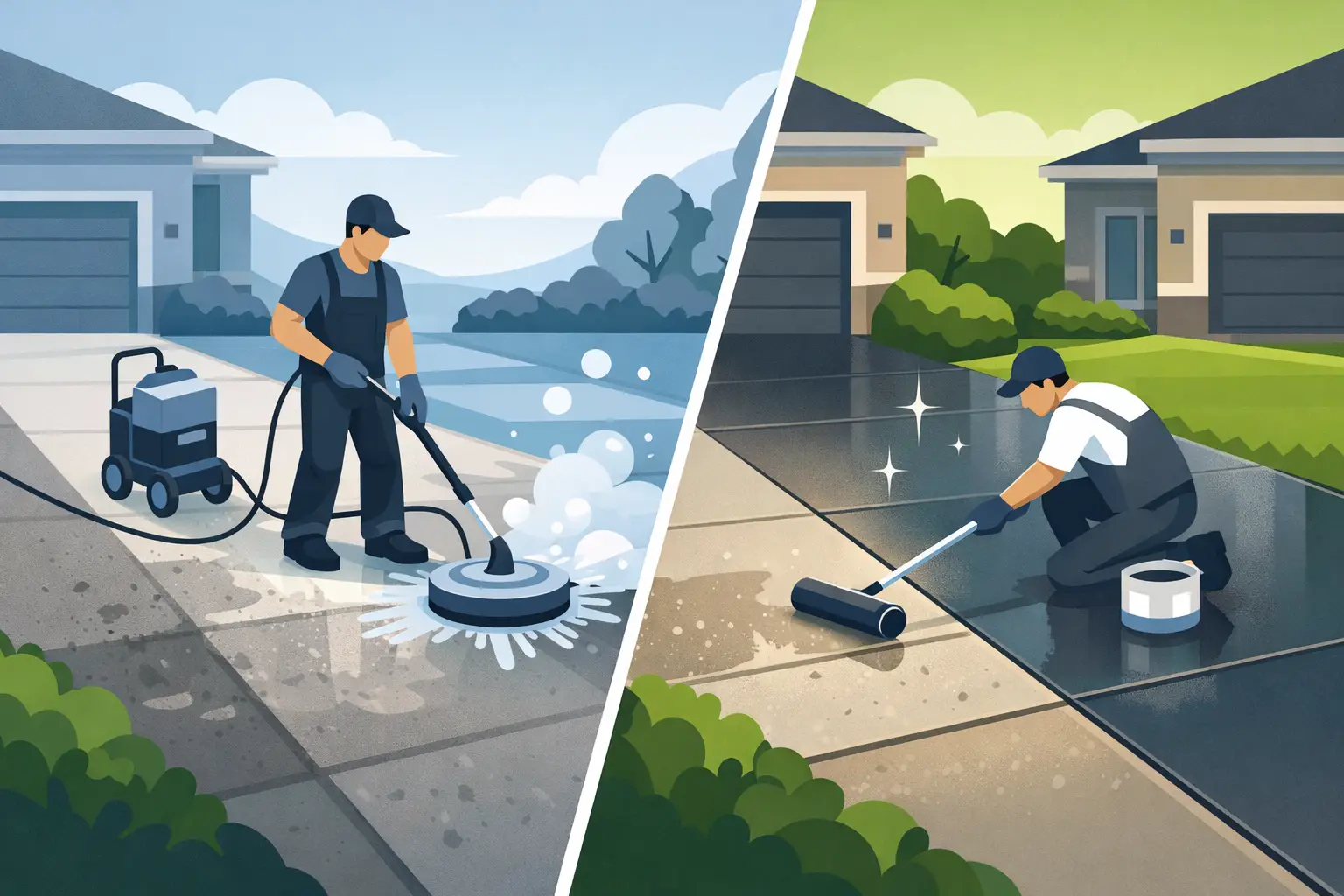
Driveways, sidewalks, patios, curbs, parking areas, and many concrete surfaces can usually handle professional pressure washing. Here, controlled pressure helps lift embedded dirt, tire marks, mud, algae, and other buildup that a garden hose cannot remove.
Even concrete requires judgment. Older concrete, cracked areas, decorative finishes, and poorly sealed surfaces may need a lower-pressure process or surface-specific treatment. The goal is a uniformly clean finish, not streaks, etched lines, or visible wand marks. Professional equipment and technique make a real difference on large driveways and commercial walkways.
Wood, brick, and specialty materials need a tailored plan
Deck cleaning requires restraint. Too much pressure can raise wood grain, create splinters, and leave uneven marks that are difficult to correct. A thoughtful cleaning process removes surface contamination while preparing the deck for staining or sealing if needed.
Brick and mortar can also be damaged by excessive pressure, particularly on older properties. Efflorescence, rust stains, paint, and deep organic staining may require specialty solutions rather than more force. Before work begins, the cleaning team should assess the surface, test an appropriate method, and set realistic expectations for stains that may be permanent or require restoration beyond washing.
Preparing Your Property for Exterior Washing
A little preparation helps protect your property and allows the cleaning crew to work efficiently. Move lightweight furniture, outdoor decor, grills, toys, and potted plants away from the work area when possible. Close windows and doors, and let the team know about any leaks, damaged screens, loose siding, or areas that need special attention.
If you have exterior outlets, security cameras, doorbells, or delicate lighting near the wash area, point them out before service begins. Professional cleaners can take appropriate precautions, but clear communication prevents surprises.
Landscaping matters, too. Shrubs, flowers, and grass should be pre-rinsed and protected as needed. A responsible exterior cleaning process includes careful solution management, rinsing, and cleanup so your property looks better at the end of the job, not merely cleaner in one area.
For commercial properties, plan around tenant traffic, deliveries, customer entrances, and parking access. Early scheduling, clear work zones, and temporary signage can help keep operations moving while improving the building’s appearance.
When Should You Schedule Exterior Building Washing?
There is no single calendar date that works for every property. Most homeowners benefit from an annual exterior wash, while heavily shaded homes, properties near busy roads, and buildings surrounded by trees may need more frequent attention. If you can see green growth, dark streaking, dingy siding, or slippery concrete, it is time to consider service.
Spring is popular because it clears winter grime and prepares the property for outdoor season. Fall cleaning can be equally useful after pollen, summer humidity, and leaf drop have done their work. Property managers may choose a recurring maintenance schedule so entrances, sidewalks, dumpster areas, and building exteriors stay presentable throughout the year.
Weather affects scheduling. Exterior washing should be performed in conditions that allow solutions to work properly and surfaces to dry safely. A reputable local provider will recommend a practical service window rather than rushing through work during unsuitable weather.
Why DIY Washing Can Create Expensive Problems
Rental pressure washers can look like an easy weekend solution. For a small, durable concrete area, they may be appropriate when used carefully. The trade-off is that the margin for error is narrow, especially for siding, wood, roofs, windows, and older masonry.
Too much pressure can gouge wood, scar concrete, break window seals, strip paint, and force water where it does not belong. Using the wrong chemical can bleach a surface, harm landscaping, or fail to remove the growth that caused the staining in the first place. Ladders, wet surfaces, and powerful equipment also create real safety concerns.
Professional service brings more than stronger equipment. It brings surface knowledge, proper detergents, controlled application, and the ability to handle the full property. Superior Cleaning Solutions can coordinate exterior washing with gutter cleaning, gutter brightening, roof cleaning, deck cleaning, and concrete cleaning, helping Baltimore County homeowners and property managers avoid juggling multiple contractors.
What to Look for in an Exterior Cleaning Company
Choose a provider that asks questions before quoting the work. They should want to know what materials are being cleaned, where staining is located, whether there are drainage or roof concerns, and what results you expect. Upfront pricing and a clear explanation of the cleaning method are signs that the company is focused on protecting your property, not simply finishing fast.
Experience with both soft washing and pressure washing is essential. A one-method approach may be convenient for the contractor, but it is not always right for the building. Look for a local team with strong reviews, responsive scheduling, professional-grade equipment, and a clear process for protecting landscaping and surrounding surfaces.
Photos can help establish expectations, particularly for old stains, oxidation, rust, paint failure, or damaged surfaces. Cleaning can create a like-new transformation in many cases, but an honest professional will explain when a stain may not disappear completely or when repair is the better next step.
A freshly washed exterior changes how a property feels before anyone steps inside. If the siding is dull, the roof is streaked, or the concrete has become slippery and stained, schedule an assessment early. The right cleaning plan can protect your surfaces, improve safety, and give your Baltimore County property the well-cared-for appearance it deserves.






Leave a Reply