
A blackened driveway or slippery green patio can make an otherwise well-kept property look neglected fast. But is concrete pressure washing safe when the surface has years of Maryland weather, road salt, oil spots, and mildew on it? Yes, when the equipment, pressure, nozzle, detergent, and operator are matched to the condition of the concrete. Done carelessly, pressure washing can leave visible lines, expose weak aggregate, or worsen existing damage.
For Baltimore County homeowners and property managers, the goal is not simply to make concrete look brighter for a day. It is to remove buildup safely while protecting the driveway, walkway, patio, pool deck, or commercial entrance underneath.
Is Concrete Pressure Washing Safe? It Depends on the Surface
Concrete is durable, but it is not indestructible. Most healthy, properly cured concrete can handle professional pressure washing very well. The key distinction is between cleaning the surface and aggressively stripping it.
New concrete needs time to cure before it is pressure washed. In most cases, waiting at least 28 days is the safe standard. Pressure washing before the concrete has fully cured can disturb the surface paste, especially around edges and joints.
Older concrete also deserves a closer look before cleaning begins. If it is flaking, crumbling, deeply cracked, or already showing exposed stones, high pressure may remove more loose material. That does not mean it cannot be cleaned, but it may require a lower-pressure approach, a specialized cleaner, or repairs before washing.
A professional assessment matters because a smooth garage slab, an exposed-aggregate sidewalk, a stamped concrete patio, and a paver-bordered walkway do not respond the same way. The right method changes with the material, its age, and its condition.
What Can Go Wrong With DIY Pressure Washing?
Pressure washers are effective because they concentrate force into a small area. That same force creates problems when a homeowner uses too much pressure, holds the wand too close, or pauses in one spot.
The most common issue is striping, sometimes called tiger striping. This happens when wand passes overlap unevenly or when the cleaning path is inconsistent. Once dry, the driveway may have alternating light and dark bands that are more noticeable than the original dirt.
Etching is another concern. A narrow, high-impact nozzle can cut into the top layer of concrete, leaving permanent lines or rough patches. The risk goes up with older, softer, damaged, or poorly finished concrete. It also increases when someone tries to blast away an oil stain that actually needs pretreatment and dwell time instead of more force.
Water can create problems around the concrete, too. Directing heavy spray into expansion joints, cracks, loose edges, or areas next to a foundation can move debris and saturate places that should stay protected. A professional cleaning plan accounts for drainage, landscaping, nearby doors, garage thresholds, and runoff.
The Safe Way to Pressure Wash Concrete
Safe concrete cleaning starts before the machine is turned on. The surface should be inspected for cracks, spalling, loose pieces, failed sealant, rust stains, oil spots, and drainage concerns. Furniture, vehicles, mats, and movable planters should be cleared from the area, while nearby walls, doors, and landscaping are protected as needed.
For routine dirt, mildew, algae, and weather staining, the operator should use a controlled pressure setting and an appropriate fan tip rather than a pinpoint stream. Keeping a consistent distance from the surface is just as important as the pressure number itself. The wand should move steadily, with overlapping passes that prevent lines and patchy results.
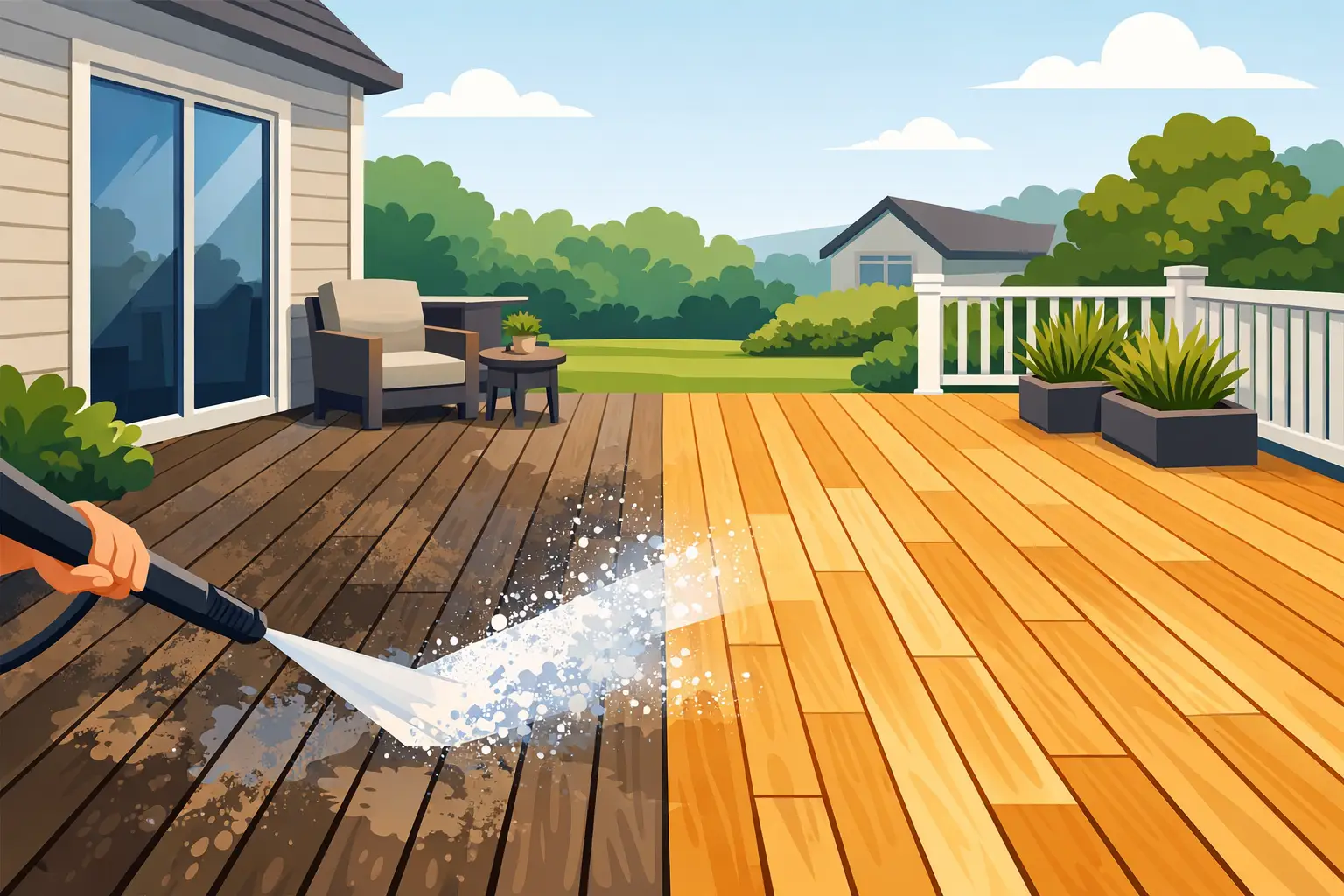
Professional-grade surface cleaners are often the better choice for broad areas such as driveways, sidewalks, and patios. These tools distribute water evenly through rotating spray bars inside a protective housing. They clean faster and create a more uniform finish than trying to wash a large driveway with a wand alone.
Cleaning solutions also do much of the work. A properly selected detergent helps break down organic growth, traffic film, and certain stains so the surface does not need excessive pressure. This is especially valuable for shaded Baltimore County properties where moisture encourages algae and mildew to return.
Stains Need Different Treatments
Not every dark mark is the same. Mildew and algae respond differently than motor oil, rust, fertilizer stains, leaf tannins, or tire marks. Increasing pressure is not a universal answer.
Oil stains may need a degreaser and time to penetrate before rinsing. Rust stains often require a concrete-safe rust remover. Organic staining may require a treatment designed to address biological growth. Using the wrong chemical can discolor concrete, harm nearby plants, or create uneven results, so product selection and proper rinsing are critical.
When Pressure Washing May Not Be the Best First Step
There are times when washing should be delayed or adjusted. Concrete with active flaking, severe cracking, loose aggregate, or a failing coating needs careful evaluation. Pressure will not repair a structural issue, and forcing water into compromised areas may make cosmetic damage more apparent.
Decorative concrete deserves extra caution. Stamped, colored, polished, painted, or sealed surfaces may require lower pressure and cleaners approved for that finish. A strong degreaser or harsh wash can dull color, remove portions of a coating, or affect the appearance of a sealer.
Cold weather is another practical factor in Maryland. Cleaning concrete when temperatures are near freezing can create slick conditions and leave water where it may freeze overnight. Scheduling on a mild, dry day gives the surface time to dry properly and makes the work safer for everyone using the property.
How Often Should Concrete Be Professionally Cleaned?
For many homes, annual concrete cleaning is enough to maintain curb appeal and remove the buildup that makes walkways slippery. Properties with heavy shade, mature trees, frequent vehicle traffic, pets, or nearby construction may benefit from more frequent service.
The best timing is often spring, when winter grime and salt residue are visible, or before listing a home, hosting an event, or completing other exterior improvements. Property managers may also schedule cleaning before tenant turnover or as part of regular exterior maintenance for retail entrances, sidewalks, and common areas.
Regular cleaning can also make inspections easier. When dirt and algae are removed, it is simpler to spot small cracks, drainage problems, or failing sealant before they become larger repair projects.
Why Professional Concrete Cleaning Protects Your Property
A rental pressure washer may advertise impressive PSI, but high numbers do not guarantee a better result. Safe cleaning comes from judgment: knowing when to lower pressure, which treatment fits the stain, how to avoid marks, and where water should and should not go.
Superior Cleaning Solutions uses professional equipment and tailored cleaning methods to give concrete a brighter, more uniform appearance without treating every surface the same. For homeowners and commercial property managers, that means a cleaner approach to driveways, patios, walkways, and entrances – with care for the rest of the property as well.
If your concrete looks dark, slick, stained, or uneven, do not wait until the buildup becomes a safety concern or a curb-appeal problem. A professional evaluation can identify the safest method for your specific surface and help your property look cared for from the ground up.





Leave a Reply