
A green stain creeping up the north side of the house is not just an eyesore. In Baltimore County, moisture, pollen, algae, mildew, and road grime can build up fast, which is why homeowners often ask about the best siding cleaning solutions before the problem gets worse. The right approach can restore curb appeal, protect your siding, and help you avoid damage that comes from using the wrong cleaner or too much pressure.
What makes the best siding cleaning solutions work
Not every stain on siding is the same, so there is no single product that solves every problem. Some homes are dealing with algae and mildew. Others have oxidation, spider webs, dirt, tree sap, or traffic film. The best siding cleaning solutions are the ones that match both the siding material and the source of the staining.
That matters because vinyl reacts differently than painted wood. Fiber cement can handle more than delicate older siding, but it still should not be blasted carelessly. Brick veneer and stucco each have their own cleaning limits too. A cleaner that works well on one surface may streak, fade, or weaken another.
In most cases, effective siding cleaning comes down to three things: the right chemistry, the right dwell time, and the right rinse method. Homeowners often focus only on pressure, but pressure is usually the least important part. In fact, using too much pressure is one of the fastest ways to damage siding, force water behind panels, or leave visible marks.
Best siding cleaning solutions by siding type
Vinyl siding
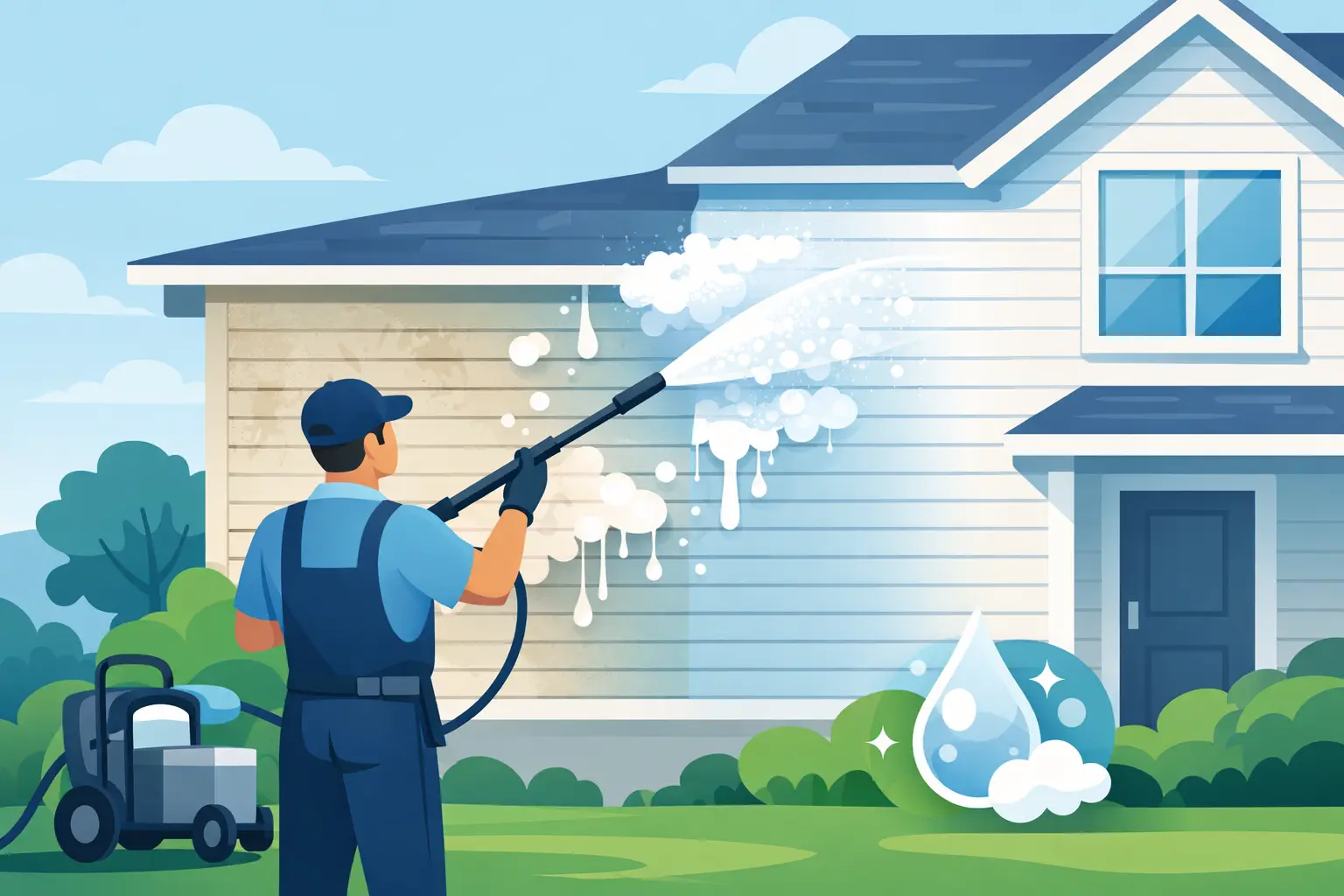
Vinyl is one of the most common materials in the area, and it usually responds well to a soft wash approach. For ordinary dirt, a mild house wash detergent mixed for exterior use is often enough. If there is algae or mildew, a professional-grade cleaning solution designed to treat organic growth works better than plain soap.
Bleach-based mixes can be effective on mildew, but they have to be handled carefully. Used incorrectly, they can affect nearby landscaping, leave uneven results, or create streaking on oxidized vinyl. Older vinyl can also become chalky over time, and aggressive cleaning may make that oxidation more noticeable instead of less.
Fiber cement siding
Fiber cement is durable, but it should still be cleaned with care. A low-pressure wash combined with an exterior cleaning detergent is typically the safest route. Heavy pressure can strip paint, especially around seams and edges. For painted fiber cement, gentler is usually better.
If mildew is present, a solution formulated for biological growth is often needed. The key is letting the cleaner do the work instead of trying to compensate with force.
Wood siding
Wood is where shortcuts become expensive. Harsh chemicals and high pressure can scar the surface, raise the grain, and strip paint or stain. For painted wood siding, a gentle cleaner and controlled soft washing are generally the safest options. For natural wood, the ideal solution depends on whether the goal is maintenance cleaning or stain restoration.
Wood also tends to hold moisture longer, so mold and mildew can return if surrounding gutters, shade, or drainage issues are not addressed.
Brick and masonry siding
Brick can look tough enough for anything, but the wrong cleaner can still cause trouble. Acidic products, strong degreasers, and overly aggressive pressure can damage mortar joints or leave inconsistent color. Organic staining on brick usually responds to masonry-safe cleaners and soft washing rather than brute force.
White residue on brick, called efflorescence, is a separate issue. That is a moisture-related mineral deposit, and it needs a different treatment than algae or surface dirt.
The biggest mistake homeowners make
The most common mistake is renting a pressure washer and assuming more force equals better results. It may remove surface grime quickly, but it can also crack vinyl, etch wood, gouge trim, and push water where it should not go. Once moisture gets behind siding, you are no longer dealing with a cosmetic issue. You may be looking at mold, rot, or interior water problems.
Another frequent mistake is using household products that were never meant for exterior surfaces. Dish soap, straight bleach, or heavy degreasers may sound simple, but they can leave residue, damage finishes, or harm plants around the home. Even if the siding looks cleaner at first, the long-term result may not be worth it.
When store-bought cleaners are enough
If your siding has light dirt, pollen, and a few seasonal marks, a store-bought exterior siding cleaner may be perfectly fine. This is especially true on newer vinyl in good condition. The best results usually come from applying the cleaner evenly, allowing proper dwell time, and rinsing thoroughly with low pressure.
Still, there is a limit to what over-the-counter products can handle. Black streaks, green algae, oxidation, and years of buildup often need a stronger professional solution and a method that treats the entire surface evenly. Spot-cleaning can leave obvious clean patches that make the rest of the house look worse.
When professional siding cleaning is the better call
There is a point where DIY stops being efficient and starts becoming risky. If your home has multiple stories, delicate siding, stubborn biological growth, or areas that have not been cleaned in years, professional service is usually the smarter move. The value is not just convenience. It is getting the right result without damaging the property.
A professional house wash typically uses commercial-grade cleaning solutions, controlled application methods, and proper rinse techniques based on the material. That means better cleaning, less risk, and a more uniform finish across the whole home.
For homeowners and property managers, it also saves time. Instead of buying chemicals, setting up equipment, testing surfaces, and hoping for the best, you get fast scheduling, upfront pricing, and visible results. That is especially helpful before listing a property, hosting guests, or getting ready for seasonal maintenance.
How often siding should be cleaned
Most homes benefit from professional siding cleaning every 12 to 24 months, but it depends on the environment. Homes under heavy tree cover, near busy roads, or on shaded lots often need attention more often. If your gutters overflow, your siding stays damp, or you have recurring algae growth, waiting too long usually makes the job harder and more expensive.
Regular cleaning is not just about appearances. It helps you catch problems early, including cracked caulk, loose panels, oxidation, and moisture-prone areas around windows and trim.
Choosing the best siding cleaning solutions for long-term results
The best siding cleaning solutions are not always the strongest ones. They are the ones that clean thoroughly while protecting the material underneath. That means considering the age of the siding, the type of buildup, the condition of paint or finish, and the surrounding landscaping.
It also means looking beyond the siding itself. If the roof is shedding black streaks, if gutters are overflowing, or if deck runoff is splashing the lower walls, those issues can keep bringing stains back. A one-time cleaning helps, but a full-property approach often delivers better long-term results.
That is one reason many homeowners prefer working with a company that handles more than one service. If the siding is dirty, the gutters are streaked, the concrete is stained, and the roof has visible growth, solving everything at once can save time and improve the overall look of the property.
What to expect from a quality siding cleaning service
A quality service should start with a clear assessment of the siding material and the staining involved. From there, the cleaning method should be adjusted to the surface instead of using the same process everywhere. You should also expect straightforward pricing, honest recommendations, and realistic expectations if oxidation, age, or sun fading are part of the issue.
At Superior Cleaning Solutions, that service-first mindset matters because homeowners want more than a quick rinse. They want their property treated with care, their questions answered clearly, and results that make the home look refreshed instead of just temporarily wet.
If your siding is looking dull, stained, or streaked, the next best step is not guessing which cleaner might work. It is choosing a solution that fits your home, protects the surface, and leaves the whole property looking the way it should.





Leave a Reply