
A roof can look dirty long before it is failing, but the black streaks, green growth, and dull patches should not be ignored. Homeowners often ask, “how often clean roof shingles?” For most Baltimore County homes, the answer is not a fixed annual schedule. It depends on shade, moisture, nearby trees, roof age, and what is actually growing on the shingles.
The right roof-cleaning schedule protects curb appeal without exposing asphalt shingles to unnecessary wear. A professional inspection and gentle cleaning when needed is usually a better plan than treating roof washing like a yearly pressure-washing job.
How Often Should You Clean Roof Shingles?
Most asphalt shingle roofs benefit from professional cleaning about every two to five years. Homes with heavy tree cover, north-facing roof sections, poor sun exposure, or frequent moisture may need attention closer to every one to two years. Open, sunny properties with little organic debris may go longer between cleanings.
Baltimore County weather creates ideal conditions for algae, mildew, moss, and lichen. Humid summers, spring rain, falling leaves, and winter moisture can keep shaded roof areas damp for extended periods. That is why two homes on the same street can have very different roof-cleaning needs.
Instead of cleaning on a calendar alone, inspect the roof from the ground twice each year – once in spring and once in fall. Look for dark streaks, green patches, moss near edges or valleys, and piles of leaves that hold moisture against the roof. If you see active growth spreading across the shingles, it is time to schedule a professional evaluation.
What Is Growing on Your Roof?
Not every roof stain is the same, and the material on the shingles affects how quickly you should act.
Black streaks are often caused by algae. This is common on asphalt shingle roofs and tends to appear on shaded or north-facing sections first. Algae may begin as a cosmetic concern, but widespread growth can make the roof look aged and neglected. It can also trap moisture and contribute to uneven discoloration over time.
Green growth is usually moss or a mix of moss and algae. Moss holds moisture against the shingles and can lift shingle edges as it thickens. That creates a bigger concern than simple staining because lifted shingles are more vulnerable to wind and water intrusion.
Lichen is the crusty, pale green or gray growth that attaches firmly to the roof surface. It is slow-growing but stubborn. Removing it aggressively can damage shingles, so it needs a patient, low-pressure treatment approach. A reputable roof-cleaning professional will explain that some dead lichen may release gradually rather than disappear the same day.
Signs Your Roof Should Be Cleaned Soon
A roof does not have to be completely covered in growth before it deserves attention. Early cleaning is often easier, gentler, and more affordable than waiting for organic buildup to become severe.
Schedule a roof-cleaning assessment if you notice:
- Black streaks growing wider or darker after rain
- Moss accumulating along shingle edges, valleys, or around vents
- Green or gray growth in areas shaded by trees
- Leaves, needles, and branches collecting in roof valleys
- Gutter overflow that leaves roof edges wet
- A roof that looks noticeably stained compared with nearby homes
It also makes sense to inspect the roof after a long wet season, major windstorm, or a period when gutters have been overflowing. Cleaning and maintenance work together. If debris remains in gutters and valleys, moisture can return quickly after the roof is cleaned.
Why Annual High-Pressure Washing Is the Wrong Approach
Roof shingles are not concrete. They have protective granules that help shield the roof from sunlight and weather. High-pressure washing can dislodge those granules, break shingle seals, force water beneath the roofing system, and shorten the roof’s service life.
A clean roof should never come at the expense of a damaged one. For asphalt shingles, the safer method is typically professional soft washing. This process uses low pressure and an appropriate cleaning solution to treat algae, moss, and other organic growth without blasting the surface.
The trade-off is that safe roof cleaning is not always an instant-pressure-wash transformation. Heavy moss and lichen may need careful treatment and time to release naturally. That slower process is often the right one because it respects the condition of the shingles.
Homeowners should also be cautious with do-it-yourself roof treatments. Walking on a pitched roof brings obvious fall risks, and the wrong chemical mix can harm landscaping, discolor exterior surfaces, or affect roofing materials. A trained crew can control the application, protect plants and surrounding areas, and avoid overspray on siding, decks, and windows.
Factors That Change Your Roof-Cleaning Schedule
Tree cover is one of the biggest variables. Overhanging branches drop leaves and needles, block sunlight, and keep the roof damp. Trimming branches back from the roof can help improve airflow and reduce recurring buildup.
Roof direction matters, too. North-facing slopes often receive less direct sun, so they dry more slowly. Valleys, dormers, chimney areas, and low-slope sections can also stay damp longer than the rest of the roof.
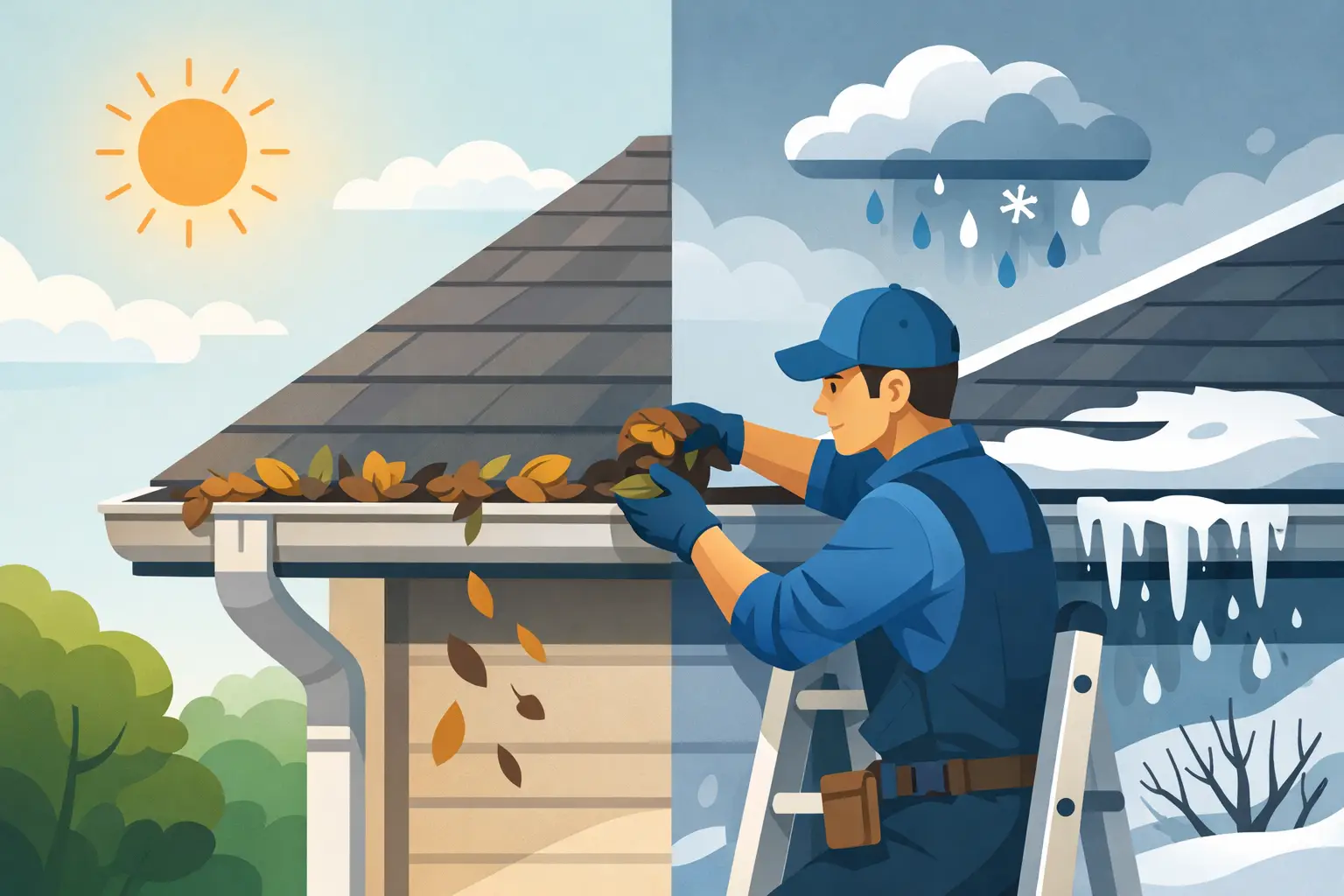
Your gutter condition plays a role. Clogged gutters and downspouts can cause water to back up near the roofline, encouraging moss and staining along the edges. Pairing roof care with gutter cleaning is a practical way to address the moisture problem instead of just treating the visible result.
The age and condition of the roof matter as well. An older roof with cracked, curling, or missing shingles may need repair or replacement before cleaning. Cleaning will improve appearance, but it cannot correct structural roofing issues. An honest service provider should tell you when roof cleaning is appropriate and when a roofer should inspect the roof first.
A Smart Maintenance Plan for Baltimore County Homes
For many local homeowners, a simple maintenance rhythm works well. Inspect from the ground in spring after winter weather and again in fall after leaves begin to drop. Keep gutters clear, remove loose debris when it can be done safely, and watch shaded sections for early signs of algae or moss.
If your roof is prone to streaking, do not wait until the entire surface looks dark. Calling early gives a professional more options to treat the growth gently. It also helps preserve the clean, well-kept look that matters when you are protecting your home’s value, preparing to sell, or managing a rental property.
A full-property approach can save time, too. When roof staining appears alongside dirty siding, overflowing gutters, or stained concrete, handling the exterior maintenance together creates a more complete result. Superior Cleaning Solutions provides roof cleaning and exterior cleaning services for Baltimore County property owners who want clear communication, careful work, and visible results without the guesswork.
Frequently Asked Questions About Roof Shingle Cleaning
Can roof cleaning make shingles last longer?
Cleaning does not turn an aging roof into a new one, but removing moisture-holding moss, debris, and algae can help reduce conditions that contribute to shingle deterioration. The key is using a roof-safe method rather than high pressure.
Should I clean my roof before selling my home?
Often, yes. A stained roof can make a well-maintained home look older than it is from the curb. If the shingles are structurally sound, professional cleaning can improve presentation for listing photos, showings, and appraisals.
Will the stains come back after cleaning?
They can, especially on heavily shaded roofs. The timing varies based on tree cover, humidity, roof direction, and gutter maintenance. That is why periodic inspections are more useful than assuming one cleaning lasts forever.
Is moss on shingles an emergency?
Small amounts are not always an emergency, but moss should not be allowed to spread. Thick moss retains water and can lift shingle edges. Addressing it early is safer for the roof and typically easier to manage.
Your roof is one of the largest protective surfaces on your property. Keep an eye on it, address growth before it becomes heavy, and choose a cleaning method that leaves your shingles cleaner without taking years off their life.




Leave a Reply