
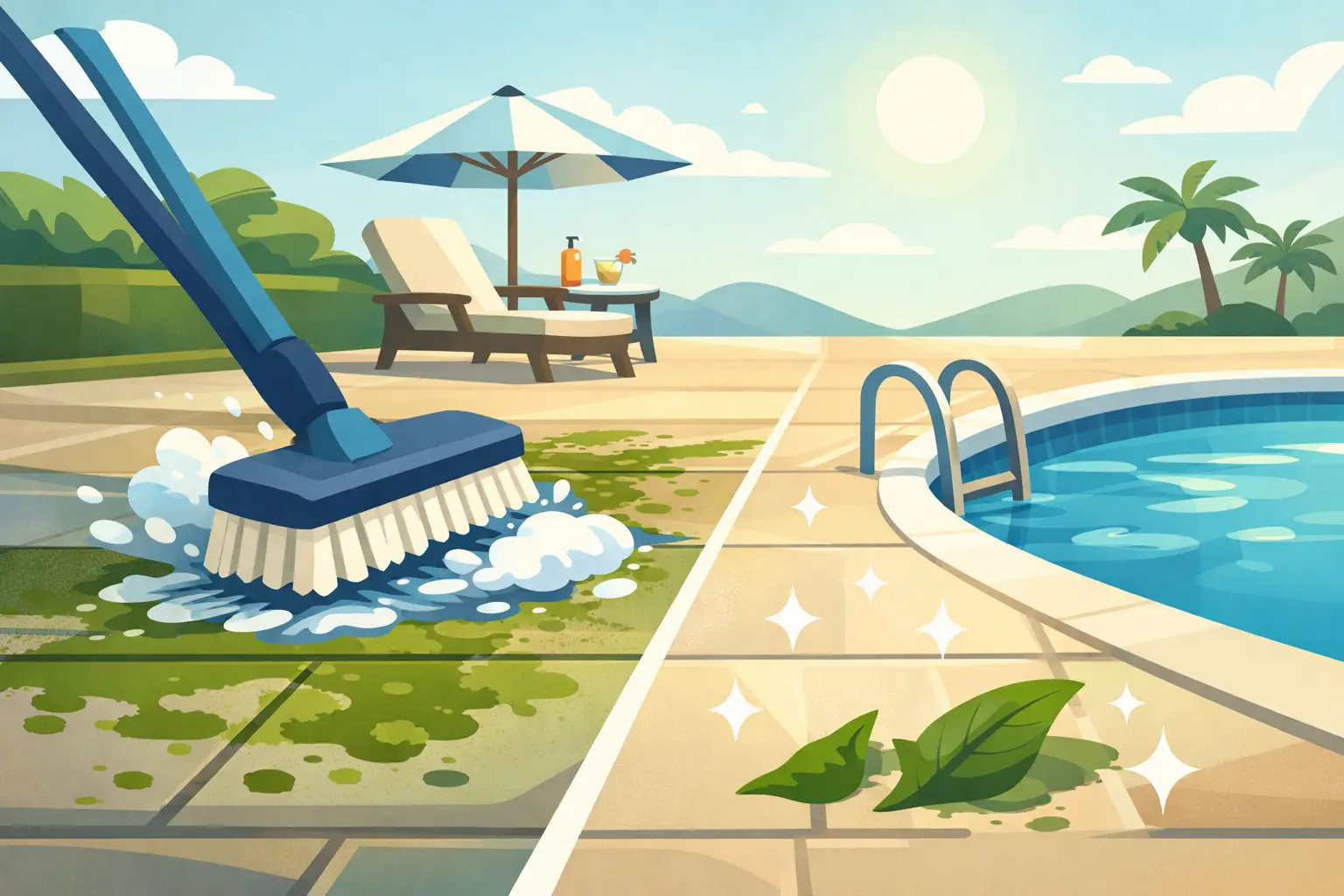
That slippery green film around your pool is more than an eyesore. Pool deck algae removal matters because algae turns a relaxing backyard feature into a real slip hazard, especially on concrete, pavers, and textured surfaces that stay damp after storms, splashing, or Maryland humidity.
For homeowners and property managers in Baltimore County, this is one of those problems that tends to grow quietly. A deck can look only slightly discolored from a distance, but underfoot it feels slick, dirty, and unsafe. If you’ve noticed green patches, dark staining, or a musty smell around your pool area, the surface likely needs more than a quick rinse.
Why pool deck algae removal should happen sooner, not later
Algae thrives where moisture lingers. Around pools, that means shaded corners, areas near landscaping, spots with poor drainage, and textured surfaces that trap water and organic debris. Pollen, leaves, sunscreen residue, and dirt all help create the kind of surface algae likes.
The first concern is safety. A slimy pool deck increases the chance of slips and falls, which is a bigger issue when kids, guests, or tenants are using the space regularly. The second concern is appearance. Even a well-kept backyard starts to look neglected when the deck is streaked green or black.
There is also a maintenance issue that many property owners miss. Algae buildup often sits alongside mildew, mold, and embedded grime. Left alone, that contamination can shorten the life of the surface, stain porous materials more deeply, and make future cleaning more difficult. In some cases, aggressive DIY cleaning done after months of buildup causes more damage than a timely professional wash would have.
What causes algae to grow on a pool deck?
Moisture is the obvious answer, but it is not the only one. Pool decks are exposed to constant splashing, wet feet, changing weather, and shaded conditions from fencing, trees, or the house itself. If drainage is poor, water sits longer and gives algae a steady place to spread.
Surface type matters too. Concrete and pavers can hold moisture below the surface, especially if they are older or unsealed. Even newer decks can develop buildup if they are surrounded by mulch beds, overhanging branches, or heavy foot traffic that tracks in dirt.
In Maryland, humidity adds another layer to the problem. Warm, damp conditions make algae growth more likely through much of the season. If your pool area gets morning shade and afternoon moisture, the deck may never fully dry between uses.
The right way to handle pool deck algae removal
A lot of homeowners start with a garden hose and a stiff brush. That can help with very light buildup, but it usually does not remove the root of the problem. Algae often clings to pores in the surface, which means the deck may look cleaner for a few days and then turn green again fast.
A better approach combines the right cleaning solution with the right washing method. This is where technique matters. Too little pressure leaves organic growth behind. Too much pressure can etch concrete, damage paver joints, scar decorative coatings, or make the surface wear unevenly.
For most pool decks, the goal is not simply blasting away visible growth. It is treating the organic contamination, lifting it from the surface, and rinsing it evenly so the deck looks clean without being damaged. In many cases, professional pressure washing or soft washing methods are chosen based on the material, age, and condition of the deck.
Why DIY cleaning can be hit or miss
Some do-it-yourself methods work for small spots, but there are trade-offs. Household cleaners may lighten the stain without actually killing the growth beneath it. Store-bought chemicals can be too harsh for nearby landscaping, pool water, or sensitive surfaces. Consumer-grade pressure washers often lack the right output and accessories for a consistent clean, which leads to stripe marks and uneven results.
There is also the pool itself to think about. Cleaning runoff should be controlled carefully so products and debris do not create water balance issues or affect nearby plants. That is one reason many property owners prefer professional service when the buildup is widespread or the deck material is expensive to replace.
If the surface is stamped concrete, coated concrete, natural stone, or older pavers, caution is even more important. What works on one deck can absolutely be the wrong method on another.
How professional pool deck algae removal gets better results
Professional service starts with identifying what is actually on the surface. Green staining may be algae, but it can also be mixed with mildew, black mold, rust marks, hard water deposits, or deep-set organic staining. Treating all of that as one problem usually leads to disappointing results.
An experienced exterior cleaning company will match the cleaning approach to the deck. That may include pre-treatment to break down organic growth, controlled surface cleaning for even coverage, and post-treatment to target lingering spores in problem areas. The result is not just a brighter deck. It is a cleaner, safer surface that stays cleaner longer.
This is also where equipment makes a difference. Professional-grade machines, surface cleaners, and commercial solutions are designed to clean larger areas thoroughly and efficiently. For homeowners, that means less guesswork, less risk, and a much more noticeable improvement.
At Superior Cleaning Solutions, this kind of work fits naturally into full-property exterior maintenance. If a pool deck is growing algae, there is a good chance nearby concrete, fencing, siding, or gutters are also showing buildup from the same moisture conditions.
When to schedule pool deck algae removal
The best time is when you first notice slick spots or discoloration, not after the entire deck has turned green. Early treatment is usually easier, faster, and more cost-effective. It also helps you avoid the frustrating cycle of cleaning only after the space starts looking unusable.
For many properties, spring is a smart time to schedule service before heavy pool use begins. That gives you a clean, safer surface heading into warmer weather. Mid-season cleaning can also make sense if trees, shade, or frequent use are accelerating buildup.
Some decks need annual service. Others may need more frequent attention based on drainage, tree cover, and sun exposure. It depends on the property. A shaded backyard with lots of surrounding vegetation will usually need more maintenance than a wide-open pool area that gets full sun all day.
How to keep algae from coming back quickly
No cleaning can guarantee algae never returns, because outdoor surfaces are constantly exposed to moisture and debris. But a few practical steps can slow regrowth significantly.
Keeping the deck free of leaves and organic debris helps a lot. So does trimming back plants that block sunlight or trap moisture near the edge of the deck. If certain spots stay wet all day, drainage improvements may be worth looking at. In some cases, sealing the surface can also help reduce how much water and contamination soak in, though that depends on the material and condition.
Routine professional cleaning is often the most reliable way to stay ahead of buildup. It protects the appearance of the pool area and reduces the need for harsher corrective cleaning later.
Signs it is time to call a professional
If the deck feels slippery, looks blotchy after scrubbing, or has widespread green or black growth, it is time. The same goes for surfaces that have not been cleaned in a long time or areas where you are worried about damage from pressure washing.
Property managers should also pay attention to liability. A slick pool deck around shared or rental spaces is not something to put off. Professional cleaning helps restore a cleaner appearance, but more importantly, it helps create a safer environment for residents and guests.
For homeowners, the biggest reason to call is often simple: you want the area to look like you care for it. A clean pool deck changes the feel of the entire backyard. It makes the space look brighter, better maintained, and ready to enjoy.
A pool should be the part of your property that feels fresh and inviting, not the area everyone tiptoes around. When algae starts taking over, the right cleaning makes a visible difference fast and helps protect the surface underneath for the long run.




Leave a Reply