
A Maryland winter can leave more behind than a few sticks in the yard. Pollen, algae, mildew, salt residue, leaf debris, and dark roof streaks can build up quickly around Baltimore County homes. A practical home exterior cleaning checklist helps you spot small maintenance needs before they turn into stained siding, clogged gutters, water damage, or a costly repair.
The goal is not to pressure wash every surface at the highest setting. Different materials need different methods, and the right approach protects your home while delivering the clean, like-new appearance you want. Plan a full exterior check twice a year – usually in spring and fall – with smaller touch-ups after major storms or long stretches of humid weather.
Start Your Home Exterior Cleaning Checklist With a Walkaround
Before bringing out a hose, ladder, or cleaning solution, walk slowly around the property. Look at the home from the curb and then inspect closer areas around doors, windows, downspouts, patios, and landscaping. This first step helps you tell the difference between normal dirt and an issue that needs prompt attention.
Watch for green or black growth on siding, dark streaks on shingles, overflowing gutters, loose debris on the roof, concrete stains, peeling paint, and areas where water sits against the foundation. Take photos if you manage a rental property or are preparing to sell. They make it easier to track changes and document the condition of the property.
If you see cracked siding, loose shingles, damaged mortar, or exposed wiring, do not clean over the problem and hope it disappears. Address the repair first. Washing a compromised surface can force water where it does not belong.
Clear Gutters and Check How Water Drains
Gutters are one of the most important items on any exterior maintenance routine. When leaves, twigs, roofing grit, and sediment block the system, rainwater can spill over the sides. That overflow can stain siding, damage landscaping, saturate the soil near your foundation, and contribute to rot around fascia boards.
Clear debris from gutters and downspouts at least twice a year. Homes beneath mature trees may need more frequent attention, especially after fall leaf drop. Flush the system with water once it is clear and confirm that each downspout carries water away from the home.
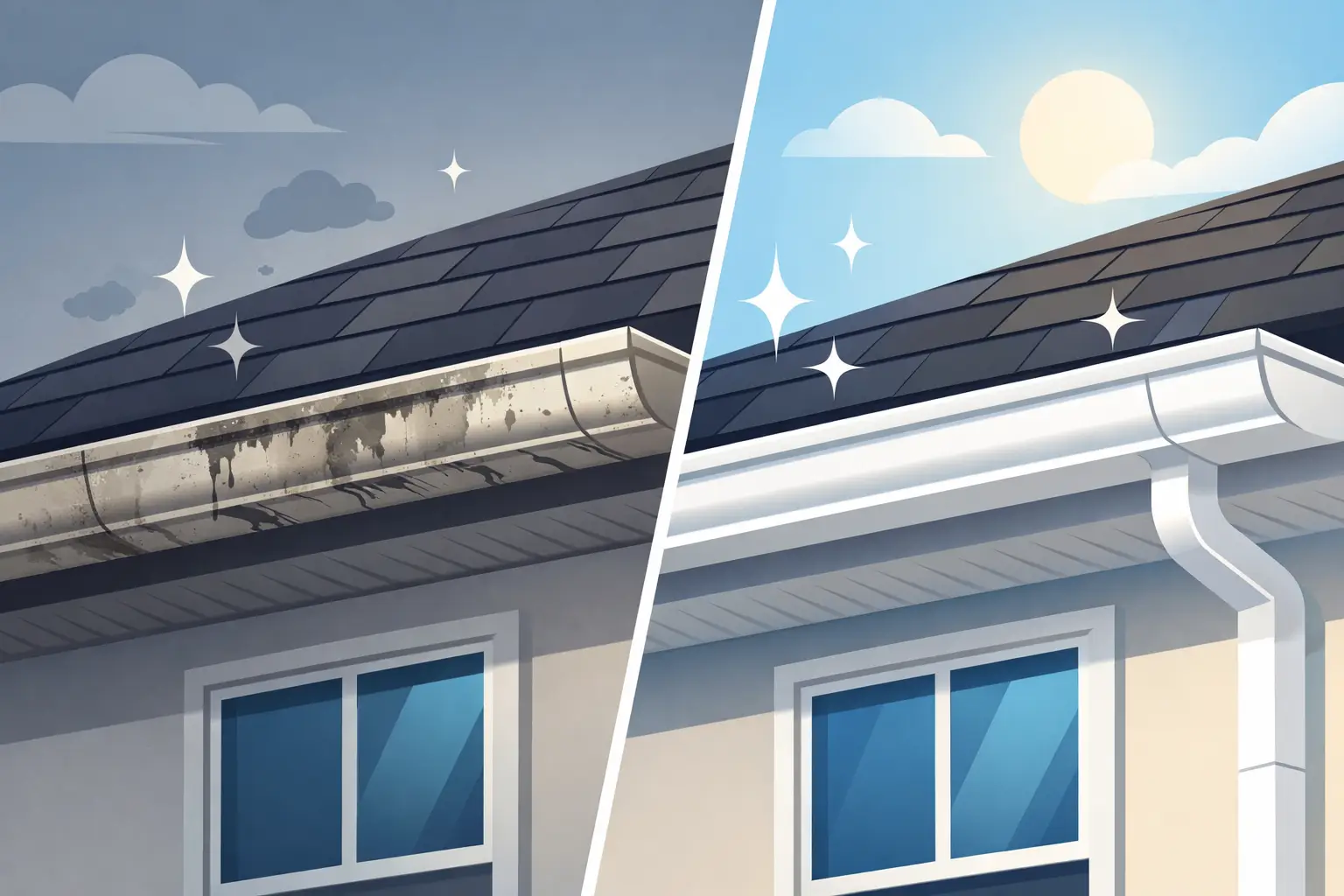
Look closely for sagging sections, leaking seams, loose brackets, and black staining below the gutter line. Cleaning can improve appearance, but it cannot correct a gutter that is pulling away from the roofline. Gutter brightening can also help remove oxidation stains that ordinary washing often leaves behind.
Clean Siding With the Right Method
Siding collects airborne dirt, pollen, spider webs, mildew, and algae. In Baltimore County, shaded sides of the house often show the heaviest growth because they stay damp longer. A gentle rinse may handle loose surface dust, but organic growth usually needs a targeted cleaning solution and enough dwell time to work.
Vinyl, painted wood, stucco, brick, and fiber cement should not all be treated the same way. Soft washing is often the safer choice for siding because it uses low pressure with professional cleaning solutions designed to remove algae and mildew without blasting water behind panels or stripping paint.
Keep windows and doors closed, cover sensitive plants when appropriate, and rinse landscaping after cleaning. Avoid using a narrow, high-pressure stream near caulk lines, light fixtures, vents, and older painted surfaces. The faster-looking method is not always the safer one.
Pay Attention to These Problem Areas
Check trim, soffits, shutters, porch ceilings, and the corners where siding meets masonry. Cobwebs and dirt gather there first, while mildew can spread around shaded entryways and under trees. Clean exterior light fixtures gently and remove insect buildup so your entry looks cared for day and night.
Treat the Roof Carefully, Never Aggressively
Dark roof streaks are often algae, not just dirt. Moss and lichen may also grow where shingles remain shaded and wet. These issues affect curb appeal, but they can also hold moisture against roofing materials if left alone for too long.
A roof is not a surface for standard high-pressure washing. Pressure can dislodge shingle granules, shorten roof life, and create leaks. Professional roof cleaning typically relies on a controlled soft-wash process that treats organic growth while protecting the roofing system.
From the ground, inspect for missing shingles, loose flashing, lifted edges, and debris trapped in roof valleys. Do not climb onto a steep, wet, or aging roof. The risk of a fall is real, and walking in the wrong areas can damage shingles. If the roof needs cleaning or you cannot safely assess it, schedule a professional inspection and cleaning service.
Refresh Driveways, Walkways, Patios, and Concrete
Concrete can make an otherwise clean property look neglected when it is covered in black mildew, tire marks, rust, oil, leaf tannins, or winter grime. Driveways, sidewalks, front steps, pool decks, and patios deserve attention because they are highly visible and can become slippery when algae grows.
Start by sweeping away loose debris. Pretreat stains based on what caused them, then use the proper pressure and surface-cleaning equipment for the material. Concrete can handle more pressure than siding, but excessive pressure or poor technique can leave visible wand marks and uneven stripes.
Oil and rust stains may need specialty treatment, and older or cracked concrete calls for extra care. If you have pavers, inspect the joints before cleaning. Strong washing can remove joint sand, so the surface may need to be resanded and stabilized afterward.
Inspect Decks, Fences, and Outdoor Living Areas
Wood decks and fences need a gentler approach than concrete. Too much pressure can fur the wood, raise the grain, scar boards, and leave an uneven finish. Composite decking may also require product-specific cleaning methods to avoid discoloration or surface damage.
Remove furniture, planters, and rugs before cleaning. Sweep thoroughly, check for loose fasteners and damaged boards, then clean using a method appropriate for the material and its condition. Once dry, consider whether the wood needs staining or sealing. Cleaning first gives you a clearer view of what maintenance is actually needed.
Do not forget railings, pergolas, screen doors, outdoor furniture, and grill areas. These smaller details make a noticeable difference when guests arrive or when a property is being shown to potential buyers or tenants.
Finish With Windows, Entryways, and Exterior Details
A clean driveway and bright siding lose some impact if the front door, windows, and entryway still look neglected. Wipe down the door, hardware, mailbox, house numbers, and doorbell. Remove cobwebs around the porch and clean glass carefully with a streak-free method.
Check window wells and basement entrances for leaves and standing water. Make sure exterior vents are clear of lint, nests, and debris. Dryer vent blockages are more than a cleaning issue – they can become a fire hazard and should be handled promptly.
For commercial properties and rental homes, include dumpster areas, common walkways, loading areas, and entrance mats in the inspection. A well-maintained exterior signals that the property is actively cared for.
Know When to Call a Professional
DIY cleaning can work for light upkeep, but professional service is the smarter choice when stains are widespread, surfaces are delicate, access is unsafe, or you want consistent results without spending your weekend managing equipment and chemicals. Roofs, multi-story siding, heavily stained concrete, clogged gutters, and large decks are common examples.
A qualified local team should explain the cleaning method, provide upfront pricing, protect surrounding landscaping, and match the solution to the surface. Superior Cleaning Solutions helps Baltimore County homeowners and property managers handle exterior cleaning as one coordinated service, from soft washing and roof cleaning to gutters, decks, and concrete.
A clean exterior does more than improve the view from the street. It gives you a chance to catch water, drainage, and surface issues early – and that peace of mind is worth putting this checklist on the calendar before the next season changes.





Leave a Reply