
A patio can look worn out long before it is actually damaged. In Baltimore County, damp springs, humid summers, falling leaves, and winter runoff leave concrete, pavers, and stone with dark staining, algae, mildew, and slippery buildup. This guide to patio surface cleaning helps homeowners choose the right approach for the surface underfoot, protect their investment, and know when professional equipment is the safer choice.
Start With the Surface, Not the Stain
The best cleaning method depends on what your patio is made of. A technique that works well on plain concrete can damage joint sand between pavers or leave natural stone with permanent marks. Before bringing out a pressure washer or cleaner, identify the surface and inspect it for cracks, loose pieces, crumbling mortar, or failed sealant.
Concrete is durable, but it is porous. Dirt, tire marks, leaf tannins, grease, and organic growth can settle below the surface, so a quick rinse may make little difference. Pavers need more care because aggressive pressure can remove polymeric sand from joints and create an uneven appearance over time. Natural stone varies widely. Bluestone, flagstone, limestone, and travertine can react poorly to acidic cleaners, while softer stone can be etched by excessive pressure.
If your patio has been sealed, check whether the sealer is still performing. Water that beads on the surface usually indicates protection is still present. Water that absorbs quickly can signal that the surface is due for cleaning and resealing once it is completely dry.
Guide to Patio Surface Cleaning: Prepare the Area
Good results start with preparation. Move furniture, planters, grills, toys, and décor off the patio. Sweep thoroughly to remove leaves, mulch, loose gravel, and surface dirt. This simple step prevents debris from turning into muddy residue when water is applied.
Cover nearby plants if you plan to use a cleaning solution, especially around planted beds and lawn edges. Rinse greenery before and after cleaning, and never allow concentrated chemicals to sit in landscaping. Close nearby windows and doors, and keep runoff away from basement entries, electrical outlets, and low-lying areas where water can collect.
Pre-wetting the patio is often helpful, particularly with concrete. It cools the surface, loosens surface soil, and helps cleaning products spread more evenly. Avoid working in direct, intense sun whenever possible. Cleaners can dry too quickly, leaving streaks or reducing their effectiveness.
Match the Method to the Problem
A patio with light dust and pollen may only need a garden hose, a soft-bristle brush, and a mild cleaner. Heavy organic growth, oil spots, rust, or years of embedded grime require a more targeted plan.
Removing Algae, Mildew, and Dark Organic Growth
Green or black growth is more than a curb appeal issue. It can make walkways and patios slick, particularly after rain. On concrete and many paver patios, an exterior cleaner designed for organic staining can break down the buildup before rinsing. Allow it to dwell only as directed, then scrub stubborn areas with a stiff nylon brush.
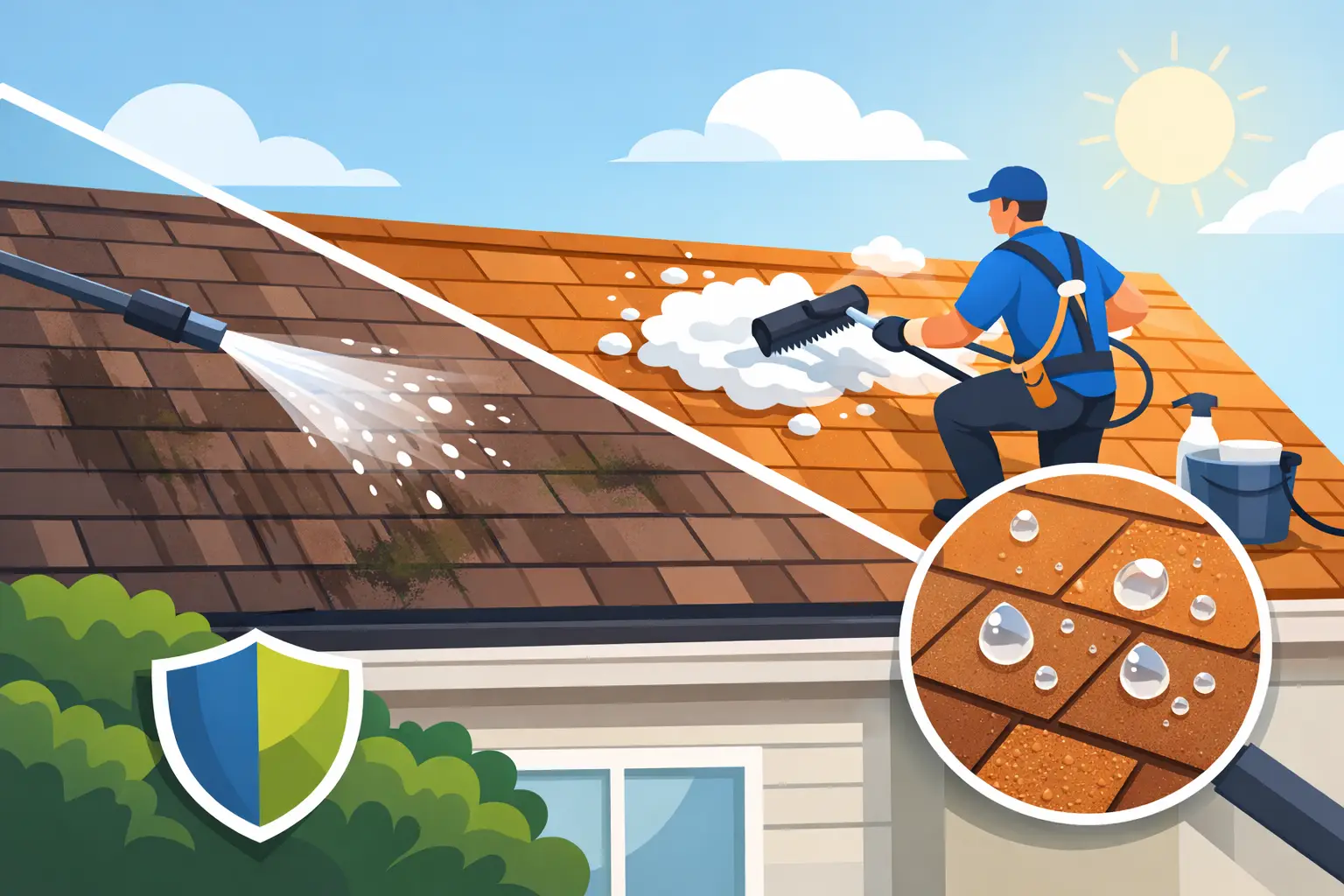
Pressure washing can restore the surface quickly, but pressure is not the whole answer. Without the right cleaning solution, high pressure may remove the visible layer while leaving spores behind in porous areas. The growth can return sooner than expected. For persistent staining, professional surface cleaning combines the appropriate solution with controlled water pressure for a more even, longer-lasting result.
Treating Oil, Grease, and Grill Stains
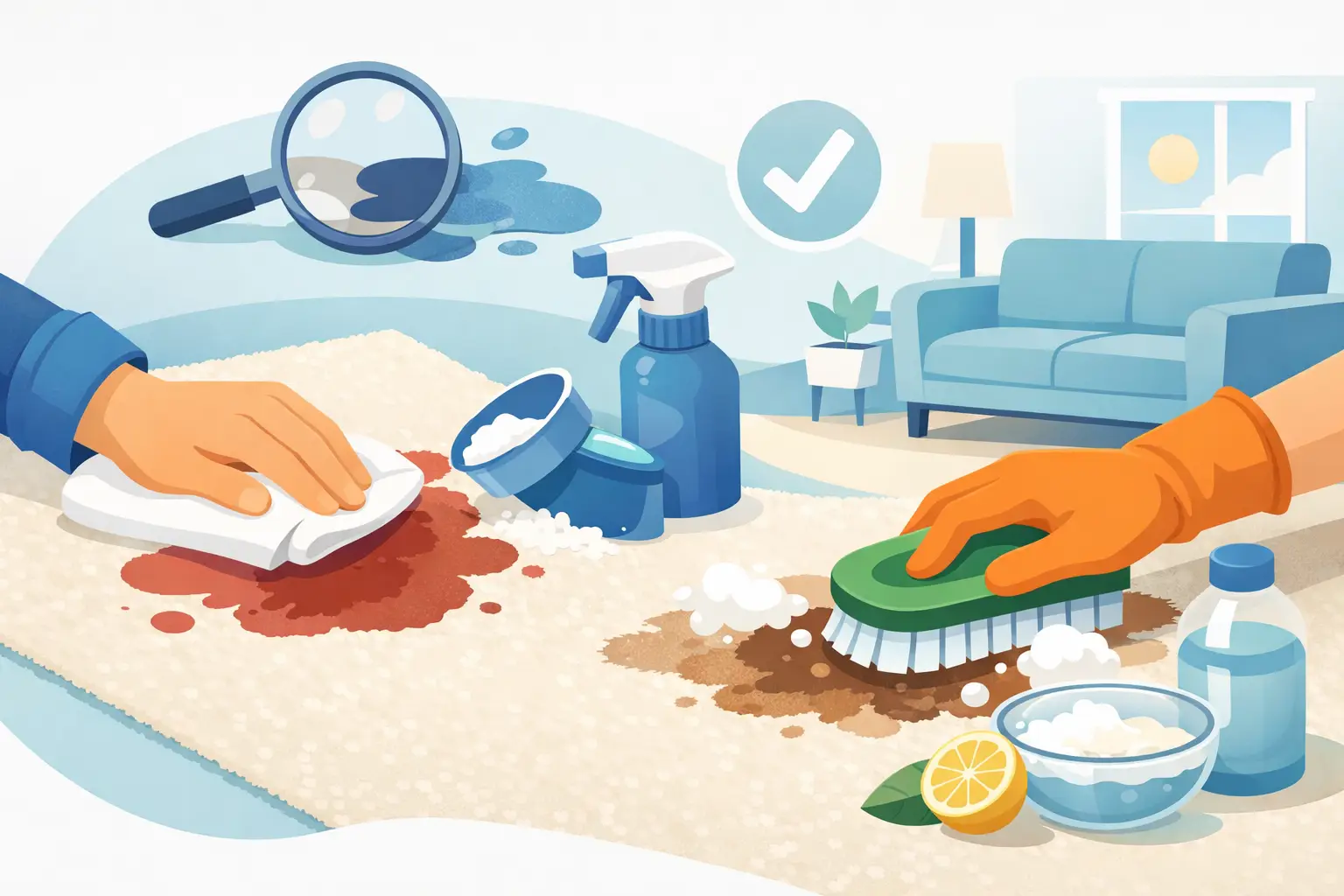
Oil stains need to be addressed differently than algae. Start by absorbing fresh spills with an appropriate absorbent material, then apply a concrete-safe degreaser. Work it into the stain with a brush and allow enough dwell time for the product to loosen the oil before rinsing.
Older oil stains may not disappear in one treatment because they can penetrate deeply into concrete. Repeated applications may improve the appearance, but setting expectations matters. A professional cleaning can make a significant visual difference, yet no reputable provider should promise that every old petroleum stain will vanish completely.
Handling Rust, Leaf Stains, and Mineral Deposits
Rust from patio furniture, fertilizer, metal décor, or irrigation can create orange-brown marks that ordinary washing will not remove. Leaf tannins can leave dark outlines after a wet fall season. White, chalky mineral deposits can also appear where moisture moves through masonry.
These stains often require specialized products selected for the exact surface. This is where DIY cleaning can go wrong. Acidic rust removers may damage certain natural stones, alter concrete color, or weaken surrounding materials if used incorrectly. Test a small, hidden area first and follow product directions precisely.
Use Pressure Washing With Control
Pressure washing is highly effective when it is done with proper technique. It is also one of the fastest ways to scar a patio when the pressure is too high, the nozzle is too close, or the operator holds the spray in one place.
For concrete, use a wide fan tip and keep the wand moving in steady, overlapping passes. Begin at a lower pressure and increase only if needed. Hold the nozzle at a consistent distance from the surface to avoid stripes, wand marks, and uneven cleaning.
Paver patios deserve extra caution. Excessive pressure can blast out joint sand, expose the edges of pavers, and encourage shifting. If joint material is removed during cleaning, it should be replaced after the patio dries. For a large patio, a professional rotary surface cleaner generally produces more consistent results than a wand because it reduces visible streaking and cleans broad areas evenly.
Never use high pressure on loose stone, damaged mortar, cracked concrete, or a surface that is already flaking. Cleaning will not repair deterioration, and forceful washing can make the problem worse.
Protect the Patio After Cleaning
Once the patio is clean, allow it to dry fully before returning furniture or applying any sealer. Drying time depends on weather, shade, humidity, and the material itself. In Maryland’s humid weather, a surface that looks dry may still hold moisture below the top layer.
Sealing is not necessary for every patio, but it can help reduce water absorption, staining, fading, and future organic growth. Concrete and pavers often benefit from a quality sealer, especially around pools, grills, or heavily used outdoor living areas. Natural stone should only receive a sealer approved for that specific material.
A sealer is not a substitute for maintenance. Keep leaves and mulch from collecting along the edges, clean spills promptly, and trim vegetation that traps moisture and limits airflow. Those small habits can slow down the return of mildew and staining.
When It Makes Sense to Call a Professional
DIY patio cleaning works well for routine upkeep, but some jobs need more than a rental machine and a free afternoon. Consider professional service when your patio has widespread algae, deep staining, delicate stone, extensive pavers, drainage concerns, or years of buildup. Property managers may also benefit from scheduled service that keeps common areas clean, safer to walk on, and ready for tenants or visitors.
Superior Cleaning Solutions uses professional-grade equipment and surface-appropriate cleaning methods to help Baltimore County homeowners and businesses restore patios without unnecessary damage. A trained team can also assess nearby walkways, retaining walls, decks, siding, gutters, and concrete areas when the whole exterior needs attention.
The goal is not simply to make a patio look brighter for a day. It is to remove the buildup that affects traction, appearance, and material longevity while treating your property with care.
Keep Your Patio Ready for the Next Season
Most patios benefit from a thorough cleaning once a year, often in spring after winter debris and moisture have had time to build up. Shaded patios or areas beneath trees may need attention more often. If the surface feels slick, looks darker after rain, or no longer feels inviting for outdoor meals and gatherings, it is time to act before the buildup gets tougher to remove.
A clean patio gives your home a more welcoming outdoor space and makes regular maintenance easier. Address the stains early, use a method suited to the material, and choose experienced help when the condition of the surface calls for it.




Leave a Reply